Shapes

What’s the longest book you’ve ever read?

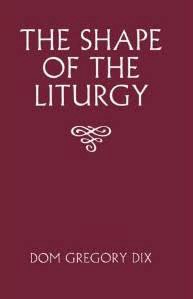
A little while ago, maybe 25 years or so, I read Gregory Dix’s The Shape of the Liturgy. Huge book, very heavy. Completely too big to read “on the road”. Yes, I think I finished it. An interesting take which has had lots of influence. So there …

I am skeptical

For Harvey, therefore, what makes Christians Christian is not that they “believe in God.” To be a Christian, which to be sure involves “believing,” entails an ongoing transformation of the emotions. Such a transformation means to believe in God is to know how to do something. In particular it means knowing how to go on when you often do not know where you are or where you are going. The truth of what Christians believe cannot be separated from who they must be. I think Harvey is quite right, moreover, to attribute this perspective to how Paul Holmer taught him to read Kierkegaard and Wittgenstein.

Skepticism arises from our desire to know without the self being transformed. Ironically skepticism is but the result of our anxious desire to secure certainty by being “at home in the world.” But we were not created to be at home in the world. We were created to glorify God, which means, as Harvey puts it, that the knowledge that comes from God cannot be possessed. Such knowledge is the work of patience that produces endurance that makes faith possible.

Foreword in Skepticism, Relativism, and Religious Knowledge: A Kierkegaardian Perspective Informed by Wittgenstein’s Philosophy

answers

What’s the best advice you’d give to someone younger than you?

I cannot recall ever giving advice to anyone. But if I were speaking to someone right now, this would be it:

There are no institutional answers to an individual’s problem.

Tbh, I think answers are highly overrated (and always extremely contextual).

an absurd hermit

Just as Camus advocated “revolt” in the face of metaphysical absurdity, contemporary thinkers and activists often call for micro-resistance:

  • Acting ethically even when systems seem rigged.
  • Organizing locally rather than waiting for top-down change.
  • Telling the truth even when it appears futile.

Absurdism thus informs a tragic ethics: not heroism with guarantees, but action without illusions. It’s the courage to do what’s right even when success is unlikely. … The absurd hero does not find meaning in the outcome but in the act itself—whether it’s fighting for justice, creating art, or simply getting out of bed each day.

Smith, KJ. A Brief History of Absurdism

free public transport

What’s one thing that would instantly improve your city?

I am not a city planner so I do not know about the economic repercussions. And I will acknowledge that it might be misused. But …

Free public transport. It would take the pressure off using cars. And, hopefully, lower the use of petrol. It would increase peoples ability to move around the city.

Again, I have no clue but …

Acts 18

And Paul after this tarried there yet a good while, and then took his leave of the brethren, and sailed thence into Syria, and with him Priscilla and Aquila; having shorn his head in Cenchrea: for he had a vow.

Acts 18:18

Hair cut and vow? What does this mean?

John 12

He that loveth his life shall lose it; and he that hateth his life in this world shall keep it unto life eternal. If any man serve me, let him follow me; and where I am, there shall also my servant be: if any man serve me, him will my Father honour.

John 12:25, 26

1549 baptism

Then shall the priest demaunde of the childe (which shalbe first Baptized) these questions blowing: first naming the childe, and saying.

N. Doest thou forsake the devill and all his workes?
Aunswere. I forsake them.
Minister. Doest thou forsake the vaine pompe, and glory of the worlde, with all the covetouse desyres of the same?
Aunswere. I forsake them.
Minister. Doest thou forsake the carnall desyres of the flesh, so that thou wilt not folowe, nor be ledde by them?
Aunswere. I forsake them.