As GREGOR SAMSA awoke one morning from uneasy dreams he found himself transformed in his bed into a gigantic insect.
Franz Kafka
Category: Books
I am skeptical
For Harvey, therefore, what makes Christians Christian is not that they “believe in God.” To be a Christian, which to be sure involves “believing,” entails an ongoing transformation of the emotions. Such a transformation means to believe in God is to know how to do something. In particular it means knowing how to go on when you often do not know where you are or where you are going. The truth of what Christians believe cannot be separated from who they must be. I think Harvey is quite right, moreover, to attribute this perspective to how Paul Holmer taught him to read Kierkegaard and Wittgenstein.
Skepticism arises from our desire to know without the self being transformed. Ironically skepticism is but the result of our anxious desire to secure certainty by being “at home in the world.” But we were not created to be at home in the world. We were created to glorify God, which means, as Harvey puts it, that the knowledge that comes from God cannot be possessed. Such knowledge is the work of patience that produces endurance that makes faith possible.
Foreword in Skepticism, Relativism, and Religious Knowledge: A Kierkegaardian Perspective Informed by Wittgenstein’s Philosophy
Father Elijah
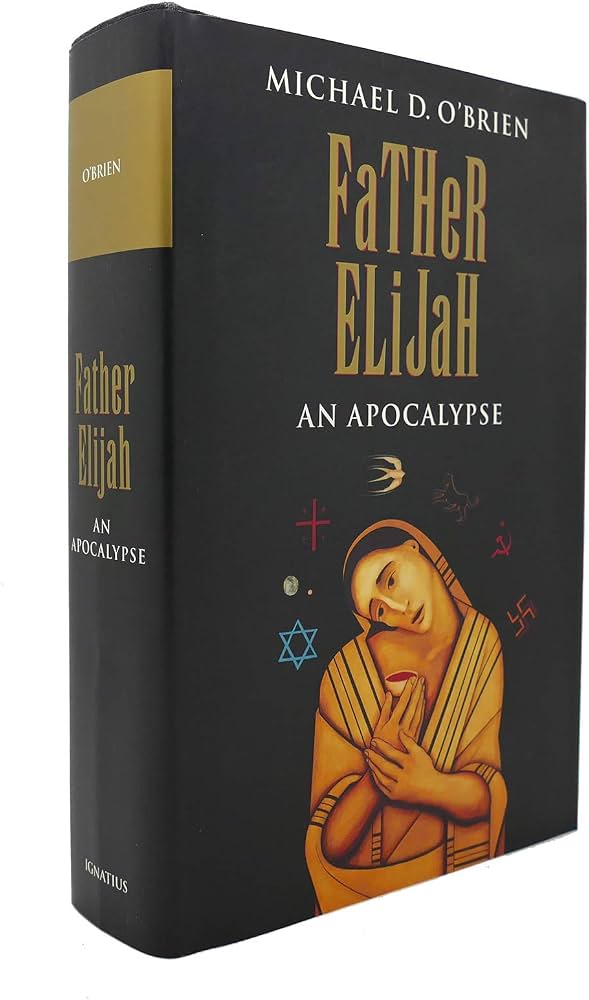
I am reading (is an audiobook still reading?) Father Elijah: An Apocalypse (while I recover from the dentist!!!). And it is most interesting (while a little preachy.) So some quotes:
Was there a missing component in all human beings? The rural masses seeking the metropolis; the urban young fleeing to the woods. Women pretending to be men; men becoming more like women; everyone aping divinity in his desperation to escape creaturehood? Western youths seeking the Orient; orientals seeking capitalism? Monks abandoning their monasteries; married men pining for solitude. Liberals seeking to demythologize the Scriptures in an attempt to flee the exigencies of biblical faith; fundamentalists seeking to fill the empty places in their religion by a return to the Old Testament, fleeing the tasks of the baptized intellect. Was the promise always to be found elsewhere, always just beyond the next horizon? Why this persistent need for signs, wonders, new pillars of fire, arks of covenant, tablets of stone—anything other than the demands of raw, laborious, darkest faith?
“I’m not sure. Exterior enemies are only part of the problem. There’s trouble inside the House of God.”
“I have seen hints of it creeping into the journals.”
“Hints? Lord, what have you been reading! It’s everywhere.”
“Just how bad is it, do you think?”
“I don’t think anyone has an accurate reading on the extent of it. But I’d say it’s pretty big. It’s going to get worse.”
“Why is it happening?”
“A lot of reasons. Spiritual temptation first and foremost. Intellectual pride. The thrill of being revolutionaries. It’s the disease of the century. C. S. Lewis called these people Late Western Man. They’re educated, affluent, restless, and unfulfilled. They’re rational man explaining and theorizing all the way down as he sinks into a totally subjectivized world. What better project for him than the complete demolition and reconstruction of the House of God, right?”
“Is it as conscious as that?”
“Not for most of them. There’s a pattern to their assumptions. With few exceptions, their ideas might be roughly summed up this way: ‘I am an idealist but a realist; I hope for a collective solution of the human problem; I no longer believe (or never have believed) in a transcendent God and organized religion. I believe in the god in man.’ ”
under his eyes
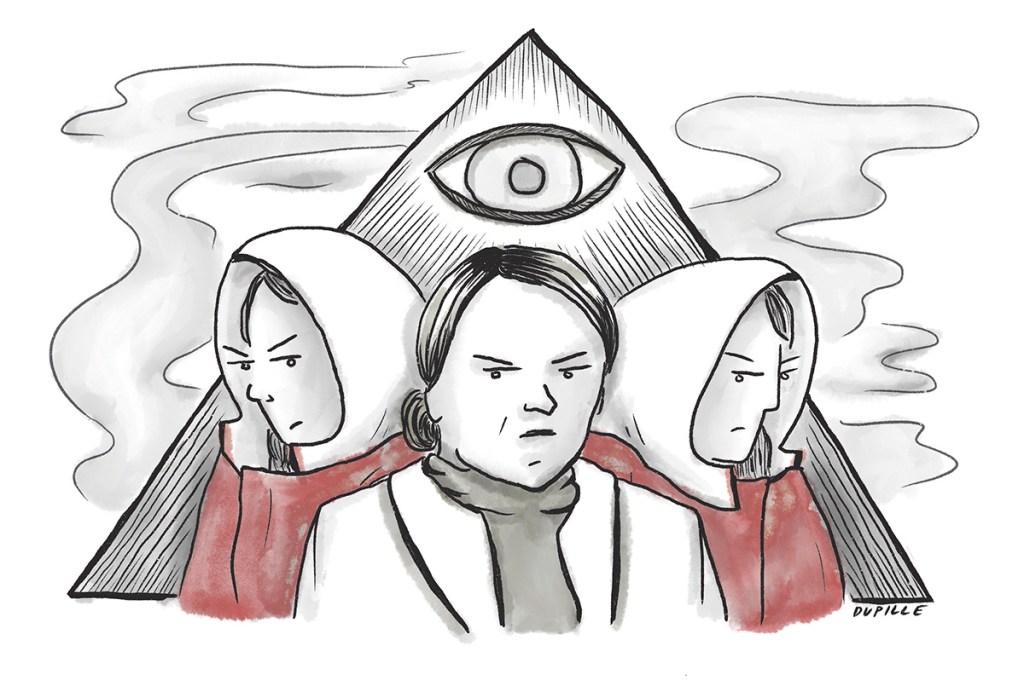
For a time I almost believed what I understood I was supposed to believe. I numbered myself among the faithful for the same reason that many in Gilead did: because it was less dangerous. What good is it to throw yourself in front of a steamroller out of moral principles and then be crushed flat like a sock emptied of its foot? Better to fade into the crowd, the piously praising, unctuous, hate-mongering crowd. Better to hurl rocks than to have them hurled at you. Or better for your chances of staying alive.
Atwood, Margaret. The Testaments
SK lol moment

I have been reading Two Ages. I read the following this morning and it gave me a laugh-out-loud moment:
I once witnessed a fight in which three men shamefully mistreated a fourth. The crowd watched with indignation; their hostile muttering began to spur them to action: some of the crowd converged on one of the assailants and threw him down, etc. The avengers thereby exemplified the same law as the assailants. If I may be permitted to interject my own incidental person, I will finish the story. I approached one of the avengers and attempted to explain dialectically the inconsistency of their behavior, but apparently it was quite impossible for him to engage in anything like that, and he merely repeated: “He had it coming. Such a scoundrel deserves three against one.” This borders on the comic, especially for the person who did not witness the beginning and then heard one man say of the other that he (the lone man) was three against one, and heard it the very moment when the opposite was the case—when there were three against him. In the first situation there was the comedy of contradiction in the same sense as “when the watchman said to a solitary person: Please break it up! Disperse!” The second situation had the comedy of self-contradiction. I gathered, however, that it was probably best for me to surrender all hope of ending this scepticism lest it be continued against me.
Kierkegaard, Søren. Kierkegaard’s Writings, XIV, Volume 14, 86-87
books
So … what are you reading?
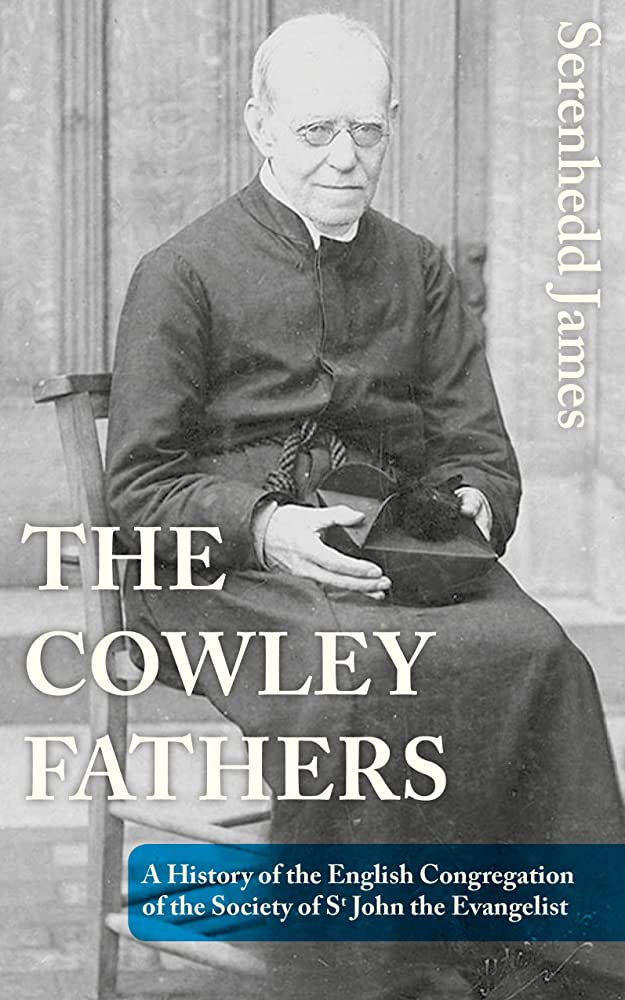
I have been reading the history of the SSJE. Most interesting! It is only the English congregation. Fascinating is the idea of a Religious community involved in mission. I think we should bring back preaching missions!
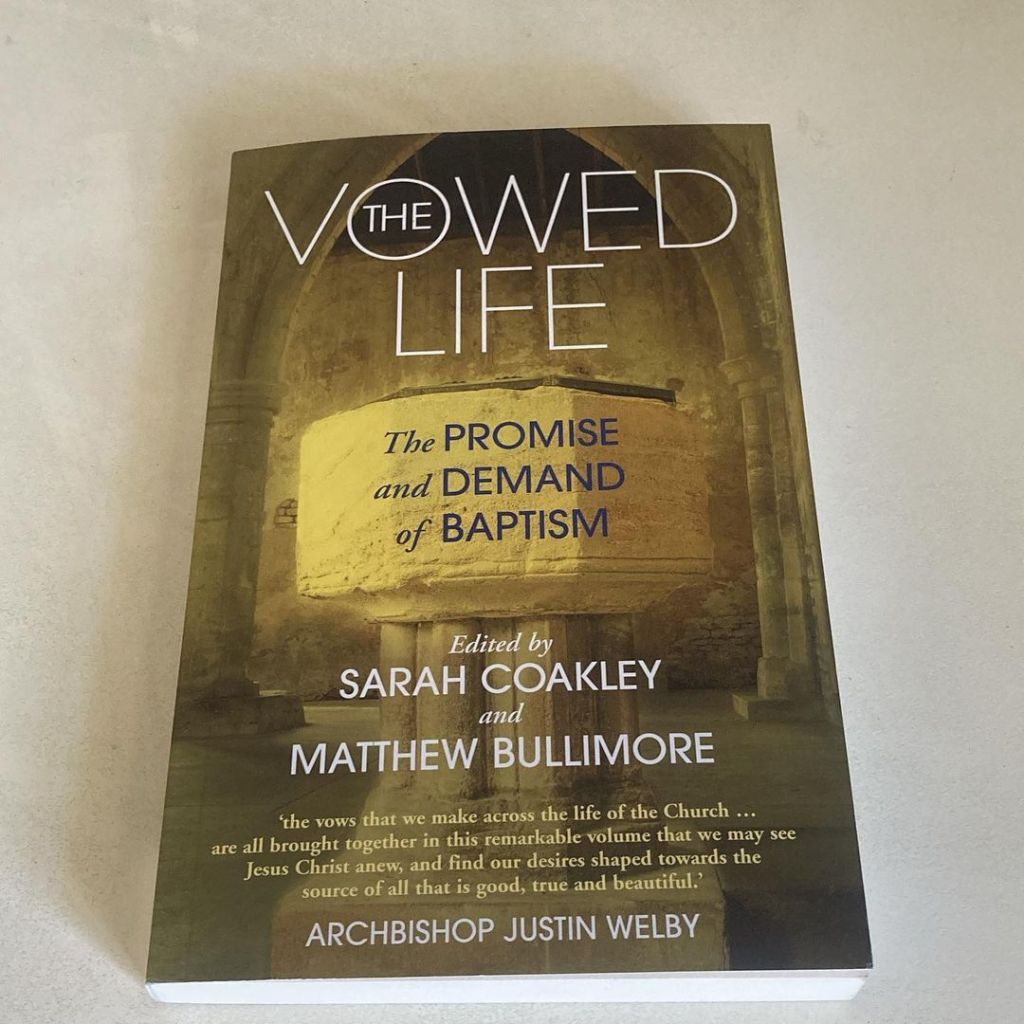
The other book I have been reading is the collection of essays in The Vowed Life. The Religious Life, that is Religious vows, as a form of baptismal living. Very good!
books, books, and more books
So I am going to limit myself to only purchasing books every second month. I have gone crazy with book purchases recently!
I am not sure what it is about books that attracts me so much. Yes, the feel and smell. But I think it is the possibility of information and insight. The connection with another person outside of time and space. Maybe it is just very self-centred?
So hot today that I cannot think!
transparent?
I feel transparent. Surely they will be able to see through me.
The Handmaid’s Tale
usefulness?
I have been reading The Handmaid’s Tale and watching the TV version. I am not sure if that is confusing me or making it a little easier.
This morning I thought of Immanuel Kant:
Kant’s formulation of humanity, the second section of the categorical imperative, states that as an end in itself, humans are required never to treat others merely as a means to an end, but always as ends in themselves.
Kanthian ethics
Part of the objectification of people is using them for their usefulness. We rank people according to how they may serve society and we reward those who are more useful and punish those who are not useful. The Handmaids are simply a more extreme example of how we trend people as a means rather than an end.
I feel my uselessness. No skills for the greater good, sickness dragging down and costing society, without purpose or end. I am very forgettable.
No answer or insight! Simply that people are much more than their usefulness.
objectification
I am reading (and watching and listening to) The Handmaid’s Tale. The premise is intriguing – a religious state trying to cope with the modern world. I know that the author names it a feminist novel but I think it has something to say about the objectification of all people. When a person – any person of any gender, race, religion, etc – is elevated (or discriminated against) due to one aspect of their personhood, society has a serious problem. I sometimes think of celebrities we celebrate for being good at sport or music – we have elevated them to “gods” for one aspect of their personhood and then we are surprised when the rest of them does not measure up.
While reading the book I have Kierkegaard’s words floating around my head:
The levelling process is the victory of abstraction over the individual. The levelling process in modern times, corresponds, in reflection, to fate in antiquity.
We place the individual below many things: community, rules, morality, even religion. And tell people that by surrendering themselves to the idea, they become somebody. Rather than telling them that by being you, you become “you”.
I think I will enjoy the book. It is a good distraction at the moment from life – an escape.

