There are in a sense two forms of apostolic succession within the life of the Church. First there is the visible succession of the hierarchy, the unbroken series of bishops in different cities . . . Alongside this, largely hidden, existing on a “charismatic” rather than an official level, there is secondly the apostolic succession of the spiritual fathers and mothers in each generation of the Church, the succession of the saints. …
Bishop Kallistos Ware of Diokleia in Spiritual Treasure in Filthy Rags: An Introduction to the Paisian Tradition through the Optina Elders, 5.
Category: Orthodox
St Elisabeth the New Martyr
Not very Orthodox, a lot more western, but most interesting.
aliens!?
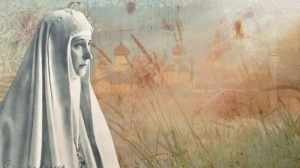
I have started a hall of heroes – a collection of individuals whose faith and life I admire. One of those is St Elisabeth – Princess Elisabeth of Hesse and by Rhine and Grand Duchess Elizabeth Feodorovna of Russia,
So here is an interesting article: A Horizon Beyond the Storm – St Elisabeth’s Gift to Us. (Filled, I must say, with very nice pictures. And, as an aside, St Elisabeth went to the visit Anglican “religious houses” before establishing her own. Now there is a book waiting to be written.)
Just one quote, from St Elisabeth:
We are strangers and pilgrims on the earth. This visible world is but the place of our sorrowful exile. Earthly days are full of deceit. For each one there comes the hour when he must go home, to the Heavenly Fatherland. God’s holy ones await death as the greatest joy. For them, the end of earthly life is the meeting with the Creator, to Whom the soul had ceaselessly reached out. A person who has given himself to God believes that the Lord watches over him in all things. Trusting in God’s saving Providence, he bears every pain and sorrow.
There is much to be said about the Romanvos. And a lot more about audocrarcy. As with all martyrs and passion-bearers, a reminder that this world is not my home. I am an alien!!!!
… be humble?
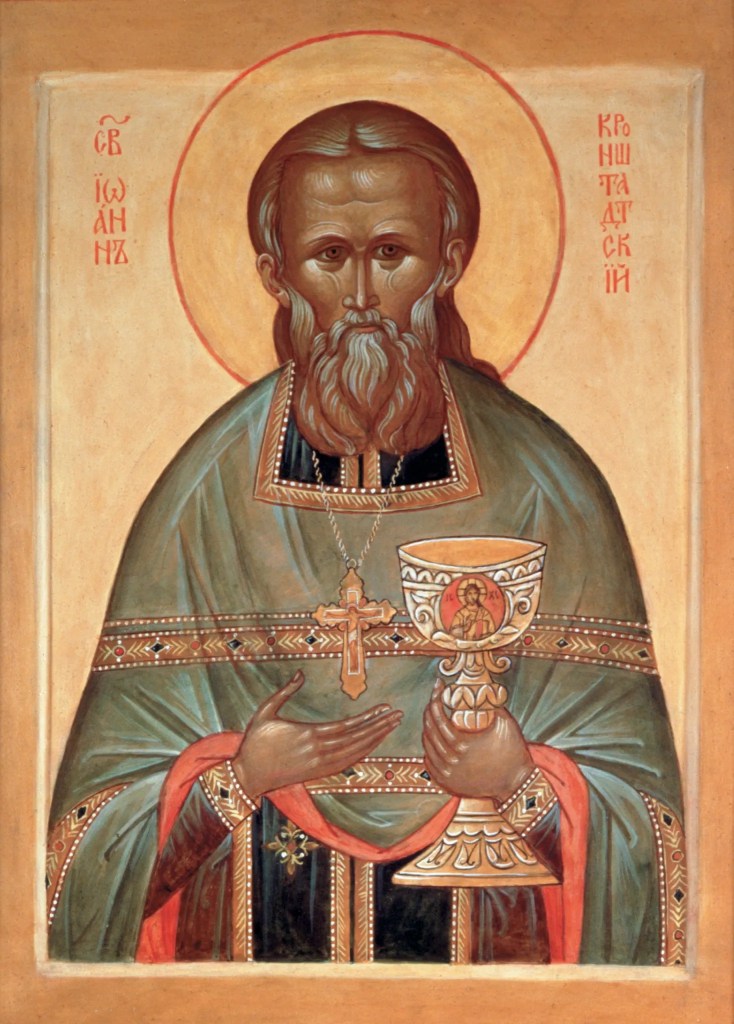
To be humble means to consider ourselves deserving, for our sins, of every humiliation, injury, persecution, and even blows; and to be meek means patiently to endure injustice, abuse, et cetera, and to pray for our enemies.
If you wish to be truly humble, then consider yourself lower than all, worthy of being trampled on by all; for you yourself daily, hourly trample upon the law of the Lord, and therefore upon the Lord Himself.
When any one, out of kindness, praises you to others, and they transmit these praises to you, do not consider them as a just tribute of esteem really due to you, but ascribe them solely to the kindness of heart of the person who thus spoke of you, and pray to God for him, that God may strengthen him in his kindness of heart and in every virtue; but acknowledge yourself to be the greatest of sinners, not out of humility, but truthfully, actually, knowing as you do your evil deeds.
A deep feeling of spiritual poverty, a lamentation at the existence of evil, a thirst after salvation, are to be found in every straightforward and humble soul.
Receive every one who comes to you, especially with a spiritual purpose, with a kind and cheerful aspect, although he or she may be a beggar, and humble yourself inwardly before everybody, counting yourself lower than he or she, for you are placed by Christ Himself to be the servant of all, and all are His members, although like you they bear the wounds of sin.
There is absolutely nothing for a Christian to be proud of in accomplishing works of righteousness, for he is saved, and is being constantly saved, from every evil through faith alone, in the same manner as he accomplishes works of righteousness also by the same faith. “For by grace you are saved through faith, and that (faith itself) not of yourselves, for it is the gift of God; not of works, that no man may glory.” So that no one can be proud of anything.
Spiritual poverty consists in esteeming oneself as though not existing, and God alone as existing; in honouring His words above everything in the world, and in not sparing anything to fulfil them, even one’s own life; in considering God’s Will in everything, both for ourselves and others, entirely renouncing our own will. The man who is poor in spirit desires and says with his whole heart: “Hallowed be Thy name, Thy kingdom come, Thy will be done in earth as it is in heaven.” It is as though he himself disappears; everywhere and in everything he wishes to see God – in himself and in others. “Let every thing be Thine, not mine.” He wishes to contemplate God’s holiness in himself and in all His kingdom, also His will; also to see Him alone entirely filling the human heart, as it should be, because He alone is all-merciful and all-perfect, all-creating; whilst the enemy -the Devil and his instruments, and those who oppose God – are thieves in the kingdom of God, and adversaries of God. To him who is poor in spirit the whole world is as nothing. Everywhere he sees God alone giving life to everything, and ruling everything; for him there is no place without God, no moment without God; everywhere and at every minute he is with God, and as though with Him alone. He who is poor in spirit does not dare and does not think of trying to comprehend the incomprehensible, to discover God’s mysteries, to philosophise on the highest; he believes in the single word of the Lord, the Life-giver, knowing that every word of His is truth, spirit, and eternal life; and in the words of His Church, ever instructed in all truth by the Holy Ghost, he believes as a child believes his father or mother, not requiring proofs, but perfectly relying upon them. He who is poor in spirit considers himself the very last and the most sinful of all, reckons himself worthy of being trampled under foot by every one.
St John of Kronstadt
Russia and the BCP
I. There is nothing in the actual contents of “Daily Morning and Evening Prayer,” together with the collects, which change according to the season, which is open to any particular objection on the positive side from the Orthodox point of view, unless the addition of the Filioque to the Creed is taken into account. But at the same time, while the recourse in prayer to the Most Holy Mother of God, to the Angel Hosts, and to the illustrious saints, the glorification and invocation of them, forms an essential part of Orthodox and Catholic worship, these things are entirely foreign to Anglican worship. It is absolutely necessary that there should be introduced into this worship some such prayers (or hymns) in one or another form and degree.
Russian Observations upon the American Prayer Book
tonsure
In English! Very beautiful.
monasticism is a strange event
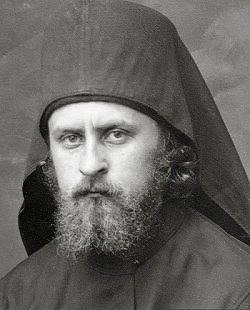
By avoiding being recognised as an institution, monasticism remains hidden from the eyes of this world, and this allows it to keep its perfect and absolute freedom to exist purely on the spiritual plane, governed exclusively by the power of the Holy Spirit. If monasticism were to become an institution, it would cease to be a life ‘outside the camp of this world;’ it would lose its charismatic power of humility and its prophetic and paradoxical character, whereby it maintains the knowledge of God on earth.
Zacharou, Archimandrite Zacharias. Monasticism: The All-Embracing Gift of the Holy Spirit, 8
Monasticism is prophetic by nature not only because of its truthful character which attracts the Spirit of Truth, but also because the prophet of God has no place in this life, just as ‘the Son of man had nowhere to lay His head’, not even in the Synagogue which had been founded in His Name. However, the word of God loves the heart of the prophet for he has God as his only refuge. It runs through his heart freely and without hindrance as a stream of living water, so that his heart becomes a precious vessel filled with words of eternal life.
ibid, 10
atonement?
For example, when asked, “What did Jesus do to save you?” many Christians will immediately answer something like, “He died on the Cross to pay the price for my sins.” Yet the idea that God the Father required repayment from Jesus to satisfy humanity’s debt to God has not always been a Christian teaching. It is also not the only way to think about salvation in Jesus Christ. This atonement model developed in the West on a trajectory from the teachings of Anselm, an eleventh-century Roman Catholic bishop. The so-called satisfaction model of Anselm has not held sway in the Orthodox Church for several reasons, including that Orthodox theology is not transactional in nature (e.g., there are not even “vows” or promises in the Orthodox Sacrament of Holy Matrimony). The main reason, however, is that a sharp and narrow focus on the Cross obscures all that the Son of God has accomplished for His fallen creation. In an Orthodox worldview, the full scope of what Jesus Christ has done must also include His Incarnation, His Resurrection, and even Pentecost.
A Basic Guide to Eastern Orthodox Theology, 29
beards etc
[W]earing a beard in Orthodoxy can and should be interpreted as an outward sign of an inward belief. The Bible makes a strong case that growing a beard is an honor for a man and glory to God. … What is it about a man’s face that would cause him to reflect on who and what he is and what is required of him? In short, if he wore a beard in compliance with the holiness code, he would immediately be reminded of his obedience to God and his ways. Modern times reflect something similar.
Ask An Eastern Orthodox Christian: On Beards
To shave or not to shave, that is the question. I have a beard because I am lazy and really dislike shaving.
Yet the above makes the point that the outward sign is a reminder for the individual. This is a great starting point for everything – clothing, religious symbols, etc. These are a reminder for me and not a religious “look at me”. Or, as Soren Kierkegaard says,
[The individual] is a stranger in the world of the finite, but does not define his difference from worldliness by an alien mode of dress (a contradiction, since it would define him as worldly); he is incognito, but his incognito consists precisely in looking just like everyone else.
Concluding Unscientific Postscript (Cambridge Texts in the History of Philosophy), 345
Ok, not incognito with a long white beard but nothing about me screams heretic!
nice picture
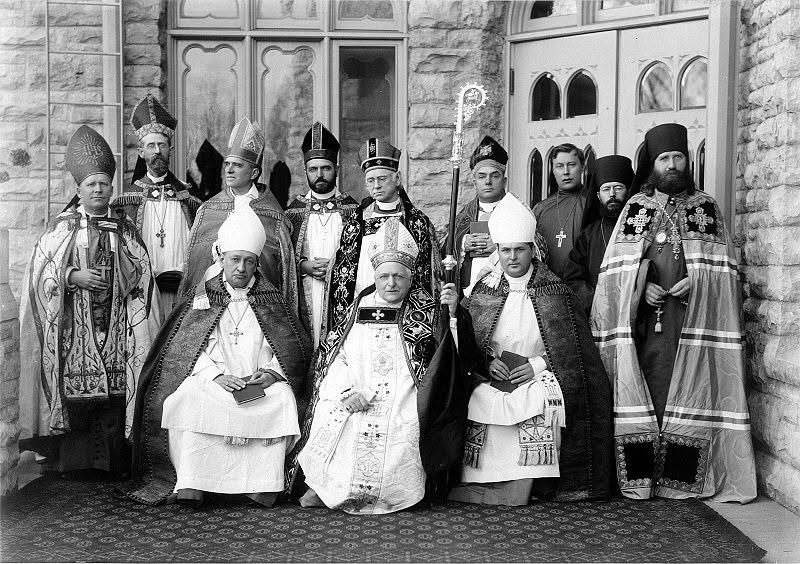
The consecration of Reginald Heber Weller as an Anglican bishop at the Cathedral of St. Paul the Apostle in the Protestant Episcopal Diocese of Fond du Lac.
Seated (left to right):
The Rt. Rev. Isaac Lea Nicholson, Episcopal Bishop of Milwaukee;
Rt. Rev. Charles Chapman Grafton, Episcopal Bishop of Fond du Lac;
Rt. Rev. Charles P. Anderson, Episcopal Bishop Coadjutor of Chicago.
Standing (left to right):
Rt. Rev. Anthony Kozłowski of the Polish National Catholic Church;
Rt. Rev. G. M. Williams, Episcopal Bishop of Marquette;
Rt. Rev. Reginald Weller,
Rt. Rev. Joseph M. Francis, Episcopal Bishop of Indianapolis,
Rt. Rev. William E. McLaren, Episcopal Bishop of Chicago;
Rt. Rev. Arthur L. Williams, Episcopal Bishop Coadjutor of Nebraska;
St. John Kochurov, Russian Orthodox protomartyr of the Bolshevik Revolution;
St. Sebastian (Dabovich),
St. Bishop Tikhon

