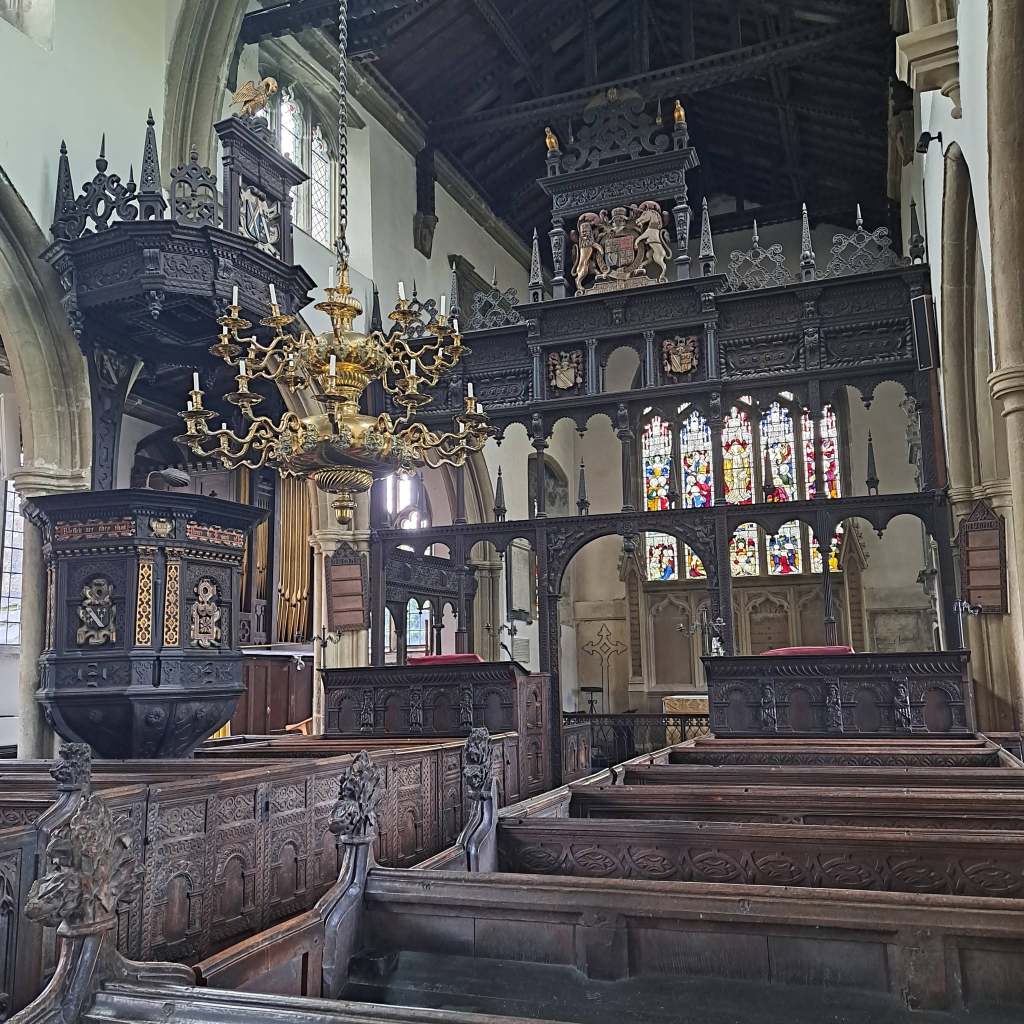
I saw this picture online, Church of St Mary the Virgin, Croscombe. This is BCP perfection. I wonder if they have space for a hermit?!
I saw this picture online, Church of St Mary the Virgin, Croscombe. This is BCP perfection. I wonder if they have space for a hermit?!
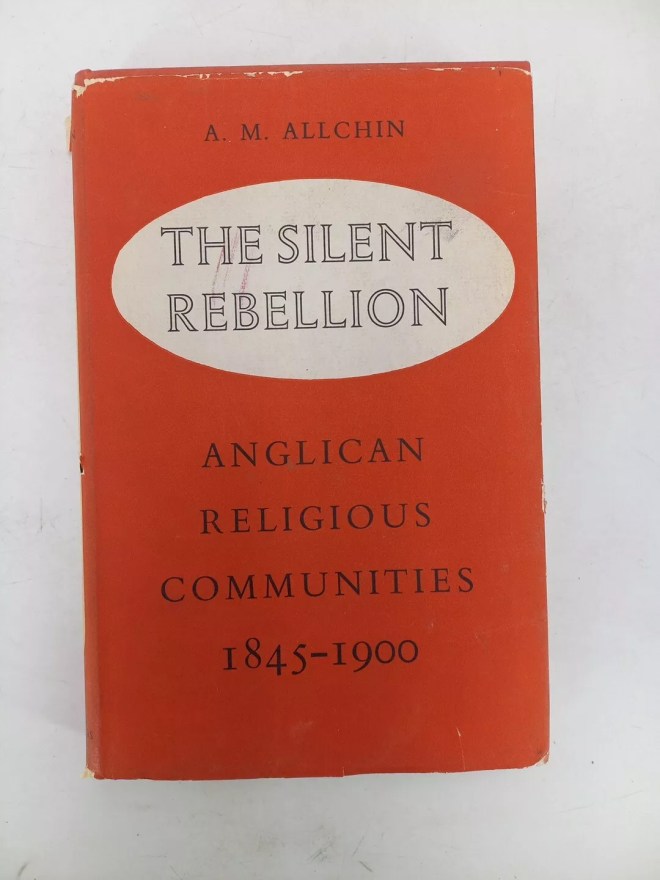
One of the first books on the revival of religious life within the Anglican Communion is titled, The Silent Rebellion: Anglican Religious Communities 1845 – 1900.
In the Preface, Allchin states:
The technical meaning of the word ‘religious’ presents some difficulties in a work of this type. For one thing, the terms ‘monk’, ‘monasticism’, etc., were used indiscriminately from the time of the Reformation until the middle of the nineteenth century or later, to describe all types of religious community. In recent times it has been usual among careful writers to confine the words ‘monk’ and ‘nun’ to religious who belong to contemplative communities or follow some form of the rule of St Benedict. But a further problem arises about the word ‘religious’ itself, especially in connexion with the question of vows. According to the Directory of the Religious Life issued by the Advisory Council on Religious Communities, with the authority of the Archbishops of Canterbury and York, the religious state is described as ‘one of voluntary and complete self-consecration to God’, ‘attained by the voluntary undertaking of certain obligations sealed by Vows, Perpetual or Temporary’ (op. cit., 2nd ed., 1957, pp. 1 and 7). The forms which religious communities may take are many, ranging from the purely contemplative to those actively engaged in works such as preaching, teaching or nursing. And, as the Archbishops state in their
Commendation of the Directory, ‘the vocation to the service of God in Communities under the threefold Vows of Poverty, Chastity, and Obedience is an energy of the Holy Spirit which a Directory of this kind can never properly describe.’ It is interesting to notice that the Directory itself includes within its scope on the one hand Solitaries who have received ‘the rare and difficult vocation of living the Contemplative Life in solitude’, and on the other hand communities whose members express a life intention of stability, but are not under the obligation of vows. An examination of the early history of Christian monasticism, and indeed of the theological aspects of the question, suggests that although vows form the usual expression and safeguard of this form of life, in themselves ‘they do not constitute the religious life’, which is rather ‘the life of the Spirit within the heart of those who take the vows’. (For a fuller discussion of this point see below, pp. 74-77 and p. 187.) In other words, the life is founded in the Word of God, and not in the words of men. It is brought into being by certain words of the Gospel which all Christians have to face, and which some are called to accept in a particularly literal way. The story of St Antony the Great, who went to church one Sunday and hearing the Gospel read ‘If thou wilt be perfect, go and sell that thou hast and give to the poor, and thou shalt have treasure in heaven; and come and follow me’ (Matt. 19.21), took God at his word, is in this sense typical and original of every religious vocation. All the subsequent developments of Christian monasticism come from this one single root.
There is a sense that the above describes the difference between an Eastern understanding, that we may call Monastic Life, and a Western understanding, that maybe called Religious Life. I think it is a good place to start when thinking about what it means when Jesus says, “if any man will come after me, let him deny himself, and take up his cross, and follow me” (Matthew 16:24).
Monasticism is prophetic by nature not only because of its truthful character which attracts the Spirit of Truth, but also because the prophet of God has no place in this life, just as ‘the Son of man had nowhere to lay His head’,10 not even in the Synagogue which had been founded in His Name. However, the word of God loves the heart of the prophet for he has God as his only refuge.
Monasticism: The All-Embracing Gift of the Holy Spirit
The paradoxical phenomenon of monasticism is not easily understood, not even by all monks. A true monk puts himself below every creature, verifying Christ’s words: ‘If any man desire to be first, the same shall be last of all, and servant of all,’ and ‘He that serves is greater than he that sits at meat.’ Who of the children of this age would be so foolish as to desire to put himself lower than all and become ‘a nothing’?
Monasticism: The All-Embracing Gift of the Holy Spirit
The individual does not stop being a human being, take off finitude’s motley in order to be dressed in the abstract garb of the monastery; but nor does he mediate between the absolute τέλος and finitude. In immediacy the individual is rooted in the finite; when resignation has convinced itself that he has acquired the absolute orientation towards the absolute τέλος, all is changed, the roots severed. He still lives in the finite, but he does not have his life in it. His life, just like anyone else’s, has the diverse predicates of a human existence, but he inhabits them as one who goes around in clothes borrowed from a stranger. He is a stranger in the world of the finite, but does not define his difference from worldliness by an alien mode of dress (a contradiction, since it would define him as worldly); he is incognito, but his incognito consists precisely in looking just like everyone else.
Kierkegaard: Concluding Unscientific Postscript (Cambridge Texts in the History of Philosophy), 344-345
… Let not him that eateth despise him that eateth not; and let not him which eateth not judge him that eateth: for God hath received him. Who art thou that judgest another man’s servant? to his own master he standeth or falleth. Yea, he shall be holden up: for God is able to make him stand. One man esteemeth one day above another: another esteemeth every day alike. Let every man be fully persuaded in his own mind. … But why dost thou judge thy brother? or why dost thou set at nought thy brother? for we shall all stand before the judgment seat of Christ. … So then every one of us shall give account of himself to God. … Hast thou faith? have it to thyself before God. Happy is he that condemneth not himself in that thing which he alloweth.
Mattins (Wednesday after Trinity 14) Reading: Romans 14
and …
Dost thou renounce the devil and all his works, the vain pomp and glory of the world, with all covetous desires of the same, and the carnal desires of the flesh, so that thou wilt not follow nor be led by them?
Public Baptism of such as are of Riper Years
We learn of the Cappadocian monastic office from the writings of St.Basil the Great (d. 379). Basil, a well-educated and cosmopolitan bishop, had visited the monastic centers of Syria, Palestine, Mesopotamia, and Egypt to learn their spirit and uses, and had lived the ascetic life with his friend Gregory Nazianzen (d. ca. 390) before becoming bishop of Caesarea in Cappadocia and exarch of Pontus in 370. His famous rules have had enormous influence on the whole history of cenobitic monasticism – St. Benedict relied heavily on Basil-right up to our own day.
To give seculars a living model of Christian life, Basil established his communities of ascetics in towns, and in Longer Rules 3:1 he explicitly rejects the idea that they are “monks.” They were simply Christians taking the whole business seriously. For this reason the practices Basil describes are close to the usages of the secular churches – otherwise how could they be an example to the laity? But at the same time to ignore the ascetical heritage of Egypt, the cradle of religious life in the popular mind, was unthinkable. So these Basilian ascetics celebrated matins and vespers in imitation of the cathedral offices, adding to them terce, sext, none, and later compline, as well as something new, a mesonyktikon or nightly vigil not at cockcrow as in Palestine and Antioch, but at midnight. Clearly, this cursus is mainly a “liturgicizing” of the ancient horarium of Christian daily prayer.
Liturgy of the Hours in East and West, 84
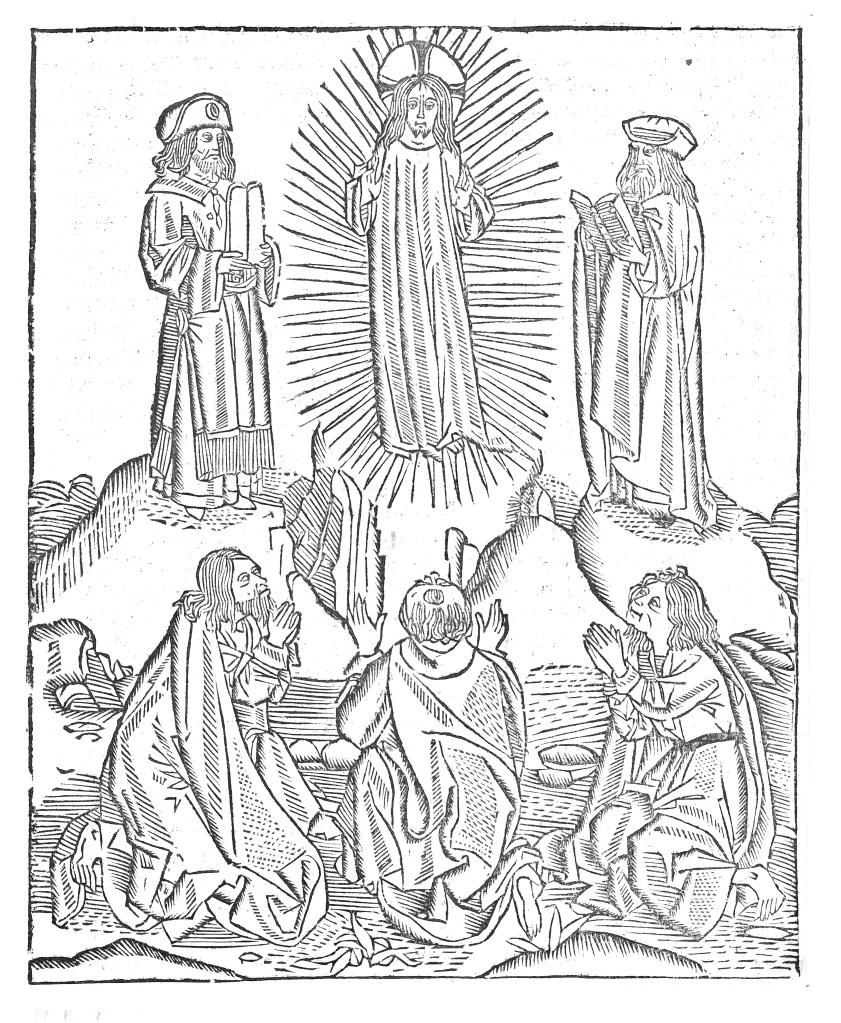
And after six days Jesus taketh Peter, James, and John his brother, and bringeth them up into an high mountain apart, and was transfigured before them: and his face did shine as the sun, and his raiment was white as the light. And, behold, there appeared unto them Moses and Elias talking with him. Then answered Peter, and said unto Jesus, Lord, it is good for us to be here: if thou wilt, let us make here three tabernacles; one for thee, and one for Moses, and one for Elias. While he yet spake, behold, a bright cloud overshadowed them: and behold a voice out of the cloud, which said, This is my beloved Son, in whom I am well pleased; hear ye him. And when the disciples heard it, they fell on their face, and were sore afraid. And Jesus came and touched them, and said, Arise, and be not afraid. And when they had lifted up their eyes, they saw no man, save Jesus only.
Matthew 17:1-8
“Jesus only” – that is my desire!
Follow on Facebook: Oratory of the Transfiguration
Canon XLII. Those who are called Eremites and are clothed in black robes, and with long hair go about cities and associate with the worldly both men and women and bring odium upon their profession—we decree that if they will receive the habit of other monks and wear their hair cut short, they may be shut up in a monastery and numbered among the brothers; but if they do not choose to do this, they are to be expelled from the cities and forced to live in the desert (ἐρήμους) from whence also they derive their name.
Council of Trullo (692)
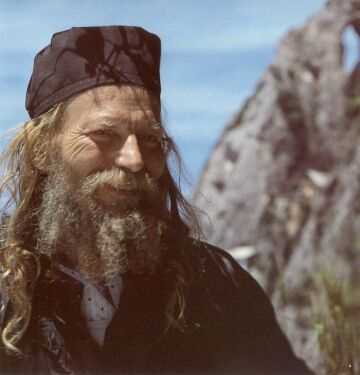
Hermits who were not monks have tended to keep both beards and hair uncut, although there have been and are exceptions. This has been based less on any specific prescription relating to hair rather than
Hermits and Hair
- following the tradition and practice of the earliest Hermits;
- as a sign of lack of interest in or concern about physical appearance;
- to minimise the need to pay attention to personal adornment through regular shaving and/or hair cutting;
- as a reaction against worldly fashion (although this has raised some concerns at times when beards and/or long hair were the height of popular fashion!).
Council of Chalcedon
Canon IV.Let those who truly and sincerely lead the monastic life be counted worthy of becoming honour; but, forasmuch as certain persons using the pretext of monasticism bring confusion both upon the churches and into political affairs by going about promiscuously in the cities, and at the same time seeking to establish Monasteries for themselves; it is decreed that no one anywhere build or found a monastery or oratory contrary to the will of the bishop of the city; and that the monks in every city and district shall be subject to the bishop, and embrace a quiet course of life, and give themselves only to fasting and prayer, remaining permanently in the places in which they were set apart; and they shall meddle neither in ecclesiastical nor in secular affairs, nor leave their own monasteries to take part in such; unless, indeed, they should at any time through urgent necessity be appointed thereto by the bishop of the city. And no slave shall be received into any monastery to become a monk against the will of his master. And if any one shall transgress this our judgment, we have decreed that he shall be excommunicated, that the name of God be not blasphemed. But the bishop of the city must make the needful provision for the monasteries.
Henry R. Percival. The Seven Ecumenical Councils of the Undivided Church: their Canons and Dogmatic Decrees

