Companion of New Skete

I am not a joiner! I did not join the “normal Anglo-Catholic” societies when I was a priest, nor any religious order as an oblate etc. But ….

It is intrinsic to ascetical theology to adapt itself to the contemporary situation, yet it can only evolve out of a living tradition with roots in the past.

English Spirituality, 13

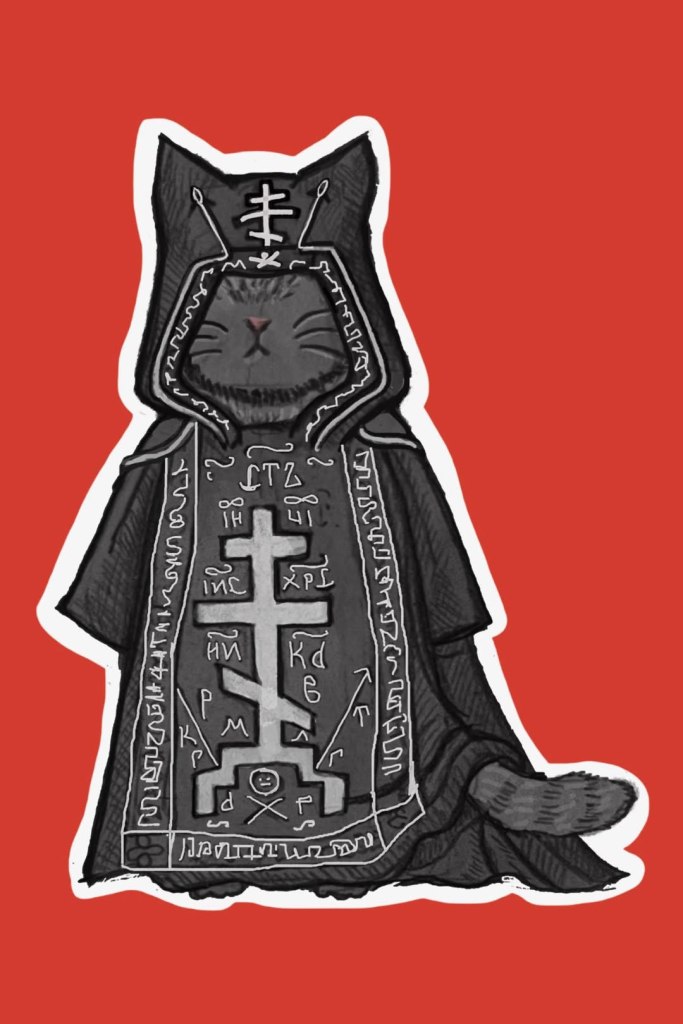
I have been accepted as a Companion of the New Skete. And I am super excited. A connection to a living tradition while I remain within my own tradition. The beginning of a Prayer Book Ascetic.
salt to society

27. In the deserts of the old world, the first monks and nuns carried on the prophetic ministry of Israel in a renewed vigor. Thus, their lives bore witness to the essential Christian message before a civil and ecclesiastical world that often suffered from secularization, political intrigue, expediency, and a generally exaggerated and inhuman structuralism. They were thereby reminders to all that the Gospel was a way of life to be sought by all through the repentance that leads to the coming universal salvation.

28. Thus, monasticism must strive to keep this goal in mind, for it must be the salt of society; and for this reason if for no other, the monastery must be accessible to all, so that they may savor its life, its worship, and its message.

29. The fourth ecumenical Council of Chalcedon established canons for the inter-relationship of the monastery and the rest of the Church: nd the rest of the Church.

a. Though he may not interfere in the internal affairs of the monastery, the hierarch has the right to visitation, to impart the customary blessings when called for, and to ordain monks presented to him for orders. He should see to it that the integrity, purpose, and goal of the monastic life is preserved free of interference for the best interest the monks and nuns as well as the clergy and laity of the diocese in particular and the Church in general.

Monastic Typikon of the New Skete

… life of asceticism

The Questions and Answers.

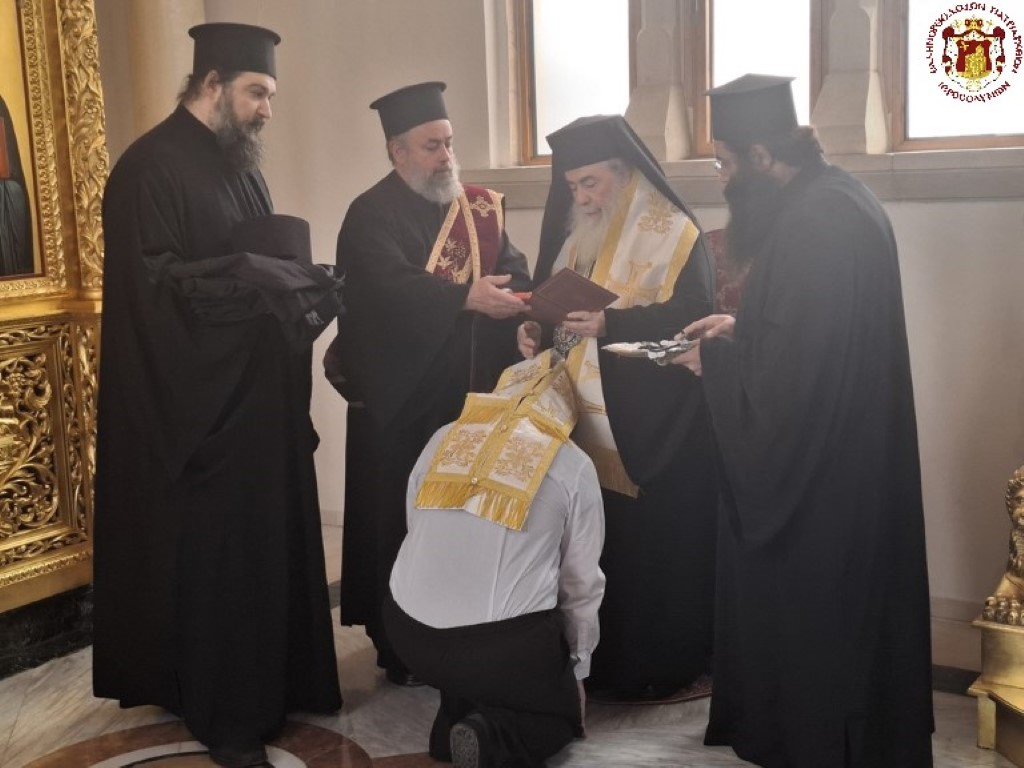
Question : Why hast thou come hither, Brother, falling down before the holy Altar, and before this holy Assembly ?
Answer: I am desirous of the life of asceticism, Reverend Father.

Question : Dost thou desire to be deserving of the Angelical Habit, and to be ranked in the company of those who are living as Monks?
Answer: Yes, God helping me, Reverend Father.

The Priest:
Truly a good work and a blessed hast thou chosen ; but only, if thou dost also accomplish it. For good works are wrought with labour, and achieved with pain.

Question: Of thine own willing mind comest thou unto the Lord?
Answer: Yes, God helping me, Reverend Father.

Question : Not by any necessity, or constraint?
Answer : No, Reverend Father.

… as at baptism

The Candidate at a Monastic Profession, a penitent like the Candidate for Baptism, comes as though to a second baptism. He is referred to in the Office itself as a Catechumen. He is unclothed in the Narthex, as though about to be baptized by immersion, and to signify that he is to put off the old man and put on the new. The Candidate takes Vows, similar to the baptismal vows of renunciation, faith, and obedience to the end of life. The Vows are taken, as at Baptism, in answer to formal and explicit questions. A new name is given, as at Baptism, which commonly has the same initial letter as the baptismal name; and the head is shorn, as at Baptism. The Habit given to the Monk or Nun at the Profession may be compared to the baptismal garments of the newly-baptized, consisting of the Chrisom-Robe, called in the Office of Baptism the Tunic of righteousness; the Girdle; and the Chrisom-Veil, known as the baptismal Cowl, or Cap. The Cross, the lighted candle, and the kiss correspond to those given at Baptism. And on the eighth day there follows the laying aside of the Cowl, after analogy of the laying aside of the baptismal robes.

In the Penitentiale of Theodore of Tarsus (a:b. 668-690) it is stated that the Monk covers his head with his Cowl for seven days, and on the seventh day the Abbot removes the head-covering, just as the Priest takes away the infant’s head-covering ; because, according to the opinion of the Fathers, the Monastic Profession is a second baptism, in which all sins are remitted as in baptism.

Monasticism in the Orthodox Church, 58-59

Theodore the Studite

Mortals, escape with me from a false world!
Christ calls. Away! Life be our voyage fair,
Safe riding o’er the surge of cares and lies!
One quest alone employs the lonely Monk,
How he may reach the Haven of true peace,
Where never comes the strain of breaking hearts.
O happy life, all music, free from sorrow!
Where is the prudent seeker of true gain
Will part with all the world and choose the Cross?

seek counsel

from Fr. Martin Thornton’s Top Ten on Direction:

1. One has absolute freedom of choice when choosing director.

Remember that Directors do not have to be clergy. There is no compulsion whatsoever when choosing a director. Though a local would make Direction easier, one does not need to choose their own priest or someone nearby.

With the internet, so very true. But where does one find such a person?

2. Give priority, when choosing, to competence.

While this might be hard to find out quickly, Thornton’s point is that your choice of Director should be not be influenced by convenience (place/age/etc.) but by the Director’s skill. Directors should be under direction themselves and should have experience before giving Direction to others.

So someone who themselves has lived the life?! Again, where to find?

4. Make the move yourself.

Like so many things in life, one must make the first move to contact and ask for Direction. The Director should never ask to direct (a sure sign of an incompetent Director).

Ok, I got the message!

idiorrhythmic monasticism

idiorrhythmic monasticism, the original form of monastic life in Christianity, as exemplified by St. Anthony of Egypt (c. 250–355). It consisted of a total withdrawal from society, normally in the desert, and the constant practice of mental prayer. The contemplative and mystical trend of eremitic monasticism is also known as Hesychasm. In the Christian East, the “idiorrhythmic” system (from Greek idios, “particular”; rhythmos, “rule,” or “discipline”) always coexisted with cenobitic monasticism. It is still practiced on modern Mount Athos, Greece. See also cenobitic monasticism.

Britannica