In essence, the monastic tonsure is a second Baptism. We have all been baptized and have given an oath that we will belong to God. We have said, “I do renounce Satan” and “I do unite myself to Christ,” and we have dedicated ourselves to God through the cutting of our hair, but we have forgotten all of this. In fact, by our Baptism, we have bound ourselves to the obligation of belonging to God. With the words “I do renounce,” which we then pronounced (if we were baptized as infants, then through the mouth of our godparent), we drove satan out of our lives, and we even spat upon him three times, losing all connection with him. With the words, “I do unite” we signed, in the presence of angels and men, a sacred contract that now we fully belong to God. With If anyone desires to come after me (Lk. 9:23) the Lord called to the unbaptized. It behooves us, the baptized, to pronounce: Speak Lord, for Thy servant heareth (1 Kg. [1 Sam.] 3:10). It is a big deal, my brothers, that we were baptized and became Christians. How terrible that we forget our baptismal vows, and from this we now lose the grace of holy Baptism.
Monastic Tonsure: Second Baptism, or the Marriage of the Soul to Christ
Category: MonasticLife
Jesus Prayer
St Elisabeth the New Martyr
living the Gospel
That we may be justified by the grace of our Lord Jesus Christ and by the guidance of the Holy Spirit, let us repudiate the customary actions of our own wills and the observance of human traditions. Let us, on the other hand, go forward by means of the Gospel of the Blessed God, Jesus Christ, our Lord. Having lived during this present life in a manner acceptable to Him, by a rigorous avoidance of all that is forbidden and a zealous observance of whatever is commended, may we be able in the future age of immortality to escape the wrath to come upon the sons of contumacy and be found worthy of obtaining eternal life and the heavenly kingdom which has been promised by our Lord Jesus Christ to such as keep his covenant and are mindful of his commandments to do them.’ [ Ps. 103:18 ] Moreover, remembering the words of the Apostle, ‘in Christ Jesus neither circumcision availeth anything nor uncircumcision, but faith that worketh by charity. [ Gal. 5:6 ] I regarded it as at once appropriate and necessary to set forth first the sound faith and sacred doctrine respecting the Father and Son and Holy Ghost, and then add the Morals.
St Basil, Preface on the Judgement of God
“Anglican” Religious Life
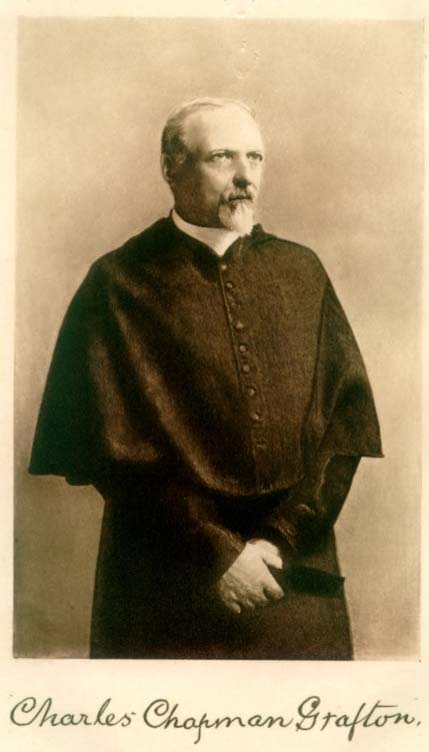
However, the general tone was of praise and support for Religious Life. The contribution which stands out, however, as one reads the debate a century later, came from Charles Grafton, Bishop of Fond du Lac in the USA, the only bishop present who had been a member of a community. He made three important points.
Petà Dunstan, Bishops and Religious 1897-1914
- First, he believed Religious Life was a vocation and should be treated as such.
- Second, it did not belong, as priesthood did, to the corporate life of the Church, but instead belonged ‘to the economy of the Holy Ghost’. Obedience to a Religious superior was a voluntary action of love, not the result of the legislative action of the Church. Unlike ‘the fixity of ministerial orders’ then, he believed the work of the Holy Ghost in the call of Religious Life manifested itself in a variety of different forms. Bishops had to trust this call to have a corrective power in itself.
- Third, he reminded the Conference that in Religious, bishops were dealing with ‘special devotional temperaments’ that could be ‘personally emotional’ about small matters of worship. A high-handed approach would not therefore be advisable. He went on to echo the arguments put forward in Father Puller’s paper, and concluded by suggesting bishops should regulate communities only in relation to property, financial donations and in insisting on communities ‘having sound government.
Fr Ignatius
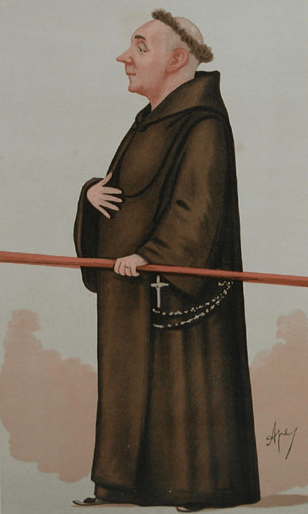
Joseph Leycester Lyne
- The restoration of the ascetic life and continual prayer in the Church of England;
- home mission work, by preaching, visiting the poor, and teaching the young;
- to afford a temporary religious retreat for the secular clergy;
- to raise the tone of devotion in the English Church to a higher standard by showing the real exemplification of the evangelical counsels;
- to aid in bringing about the union of Christendom.
more silliness …
The Holy is too great and too terrible when encountered directly for men of normal sanity to be able to contemplate it comfortably. Only those who cannot care for the consequences run the risk of the direct confrontation of the Holy.
Pelikan, Jaroslav, Fools for Christ via Foolishness for Christ
a fool
We are fools for Christ’s sake, but ye are wise in Christ; we are weak, but ye are strong; ye are honourable, but we are despised.
1 Corinthians 4.10 (KJV)
rule-breaker
It was because of this positive desire for the Kingdom of Heaven which came to dominate their whole lives that they went without things. They kept silence, for instance, not because of a proud and austere preference for aloneness but because they were learning to listen to something more interesting than the talk of men, that is, the Word of God. These men were rebels, the ones who broke the rules of the world which say that property and goods are essential for life, that the one who accepts the direction of another is not free, that no one can be fully human without sex and domesticity. Their name itself, anchorite, means rule-breaker, the one who does not fulfil his public duties. In the solitude of the desert they found themselves able to live in a way that was hard but simple, as children of God.
The Desert Of The Heart: Daily Readings with the Desert Fathers
monastic vs religious
Monasticism, in all its varieties, involves withdrawal from society. Monastic life is distinct from the “religious orders” such as the friars, canons regular, clerks regular, and the more recent religious congregations. The latter involves a special work or aim, such as preaching, teaching, liberating captives, etc., which occupies a large place in their activities. While monks have variously labored, in every case this work is extrinsic to the essence of the monastic state. Monks and friars are two distinct roles.
Christian monasticism
This is the Google AI Summary:
Monastic life is a specific, usually secluded, subset of the broader religious life, characterized by separation from the world for intense spiritual focus (contemplation). While all monastics are religious, not all religious are monastics; religious life often involves active, public service (apostolic work), such as teaching or nursing, rather than cloistered prayer.
Key Differences at a Glance:
- Monastic (e.g., Benedictine monk): Cloistered or semi-cloistered, focused on prayer, manual labor, and stability within a monastery.
- Religious/Apostolic (e.g., Franciscan, Jesuit): Active, apostolic work in the community (schools, hospitals) while living in a community.
Monastic Life
- Lifestyle: Ascetic, plain clothing, celibacy, poverty, and obedience to an abbot/abbess.
- Focus: Continual conversion of life (Conversatio Morum) and communal prayer (Divine Office).
- Types: Cenobitic (living in a community) or Eremitic (solitary hermits).

