In English! Very beautiful.
Category: MonasticLife
monasticism is a strange event
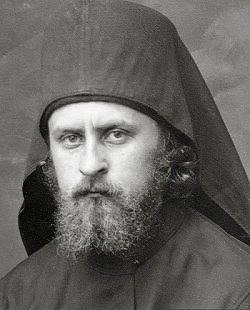
By avoiding being recognised as an institution, monasticism remains hidden from the eyes of this world, and this allows it to keep its perfect and absolute freedom to exist purely on the spiritual plane, governed exclusively by the power of the Holy Spirit. If monasticism were to become an institution, it would cease to be a life ‘outside the camp of this world;’ it would lose its charismatic power of humility and its prophetic and paradoxical character, whereby it maintains the knowledge of God on earth.
Zacharou, Archimandrite Zacharias. Monasticism: The All-Embracing Gift of the Holy Spirit, 8
Monasticism is prophetic by nature not only because of its truthful character which attracts the Spirit of Truth, but also because the prophet of God has no place in this life, just as ‘the Son of man had nowhere to lay His head’, not even in the Synagogue which had been founded in His Name. However, the word of God loves the heart of the prophet for he has God as his only refuge. It runs through his heart freely and without hindrance as a stream of living water, so that his heart becomes a precious vessel filled with words of eternal life.
ibid, 10
the nazirite
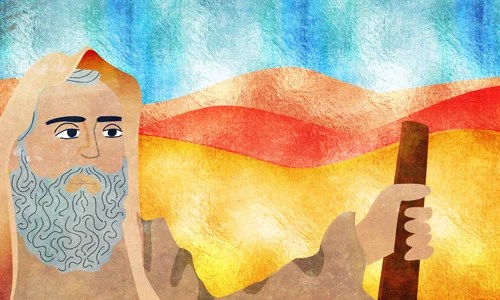
The simplest form of the ascetical life: the Nazirite.
All the days of his separation he is holy unto the Lord.
Numbers 6:8
Vow: I will not cut my hair
All the days of the vow of his separation there shall no razor come upon his head: until the days be fulfilled, in the which he separateth himself unto the Lord, he shall be holy, and shall let the locks of the hair of his head grow.
Numbers 6:5
Vow: I will not drink any alcohol
He shall separate himself from wine and strong drink, and shall drink no vinegar of wine, or vinegar of strong drink, neither shall he drink any liquor of grapes, nor eat moist grapes, or dried.
Numbers 6:3
act of love
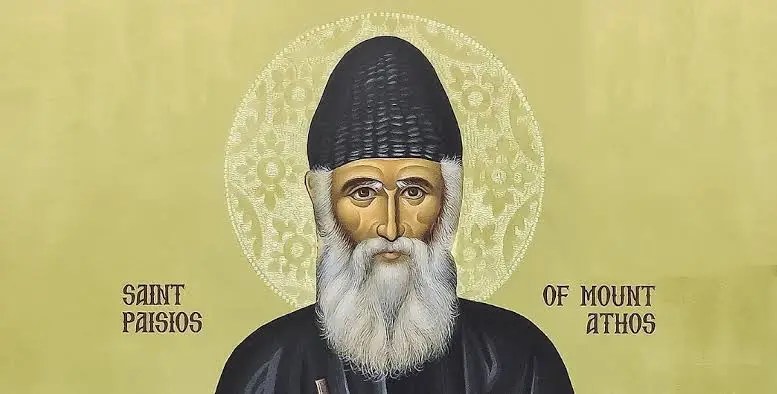
Geronta, why does the monk renounce the world?
He renounces the world because he loves the world. He does not hate the world. He does not renounce the world because he is arrogant and wants only to save his own soul. It is because he loves the world that he stays away from the world’s parasites in order to attain a better communication with the Lord.
the one of them
Then drew near unto him all the publicans and sinners for to hear him. And the Pharisees and scribes murmured, saying, This man receiveth sinners, and eateth with them. And he spake this parable unto them, saying, What man of you, having an hundred sheep, if he lose one of them, doth not leave the ninety and nine in the wilderness, and go after that which is lost, until he find it? And when he hath found it, he layeth it on his shoulders, rejoicing. And when he cometh home, he calleth together his friends and neighbours, saying unto them, Rejoice with me; for I have found my sheep which was lost. I say unto you, that likewise joy shall be in heaven over one sinner that repenteth, more than over ninety and nine just persons, which need no repentance.
Luke 15:1-7
Jesus will leave the church for the one person?
waiting …
There is, for me, a deep difference between longing and expectation.
In expectation, there is a demand – a standing in line, impatiently wondering, When will the line move?
In longing, there is a request – and a willingness to wait.
The waiting itself becomes a connection. When I truly ask – when my longing is genuine – I am open. Open even to pain, open even to disappointment.
This is living in the full force of life.
But when I am in expectation, I am demanding: The experience must come to pass! Do not disturb me now!
Ragen, Akiva ; רגן, עקיבא. The Secret of the Encounter: An existential interpretation of the book ‘I and Thou’ by Martin Buber, 8-9.
beards etc
[W]earing a beard in Orthodoxy can and should be interpreted as an outward sign of an inward belief. The Bible makes a strong case that growing a beard is an honor for a man and glory to God. … What is it about a man’s face that would cause him to reflect on who and what he is and what is required of him? In short, if he wore a beard in compliance with the holiness code, he would immediately be reminded of his obedience to God and his ways. Modern times reflect something similar.
Ask An Eastern Orthodox Christian: On Beards
To shave or not to shave, that is the question. I have a beard because I am lazy and really dislike shaving.
Yet the above makes the point that the outward sign is a reminder for the individual. This is a great starting point for everything – clothing, religious symbols, etc. These are a reminder for me and not a religious “look at me”. Or, as Soren Kierkegaard says,
[The individual] is a stranger in the world of the finite, but does not define his difference from worldliness by an alien mode of dress (a contradiction, since it would define him as worldly); he is incognito, but his incognito consists precisely in looking just like everyone else.
Concluding Unscientific Postscript (Cambridge Texts in the History of Philosophy), 345
Ok, not incognito with a long white beard but nothing about me screams heretic!
interesting article
I found this article via Facebook and thought it was interesting. Before anyone says anything, I have no view of the innocence or guilt of the individual but rather like this as a picture of transfiguration:
The Redemption of Frank Atwood
Atwood’s story echoes the lives of the great repentant saints: the Apostle Paul, once a persecutor; St. Moses the Black, a violent brigand; or St. Dismas, the thief on the cross. His prison cell became a desert where he was able to work out his salvation with fear and trembling. His correspondence reveals a soul grappling earnestly with sin, bravely confronting his mortality, and seeking union with God. His sponsors and monastic community, including monks and nuns who witnessed his transfiguration, affirmed the authenticity of this change and swore to his innocence in the murder of poor Vicki Lynne. …
On the eve of his execution, June 7, 2022, Atwood was tonsured a monk, receiving the Great Schema. He was given a new name, Ephraim.
without the church
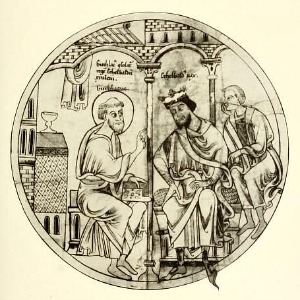
Under the guidance of the Holy Spirit, and counseled and assisted by the knight just mentioned, he moved to another village of his called Haselbury, some thirty miles east of Exeter. There in a cell abutting on the church, which had been empty for some time, and without the usual induction by the bishop and no solemn blessing, but only the inward authority of the Holy Spirit, he buried himself with Christ, shortly to be transformed with him in a sort of resurrection glory: in newness of life, in cheerfulness of spirit, in the power of signs, in the grace of prophecy.
The Life of Wulfric of Haselbury, Anchorite.
Wikipedia: Wulfric of Haselbury
Article: Saint Wulfric of Haselbury
spiritual elders
Even though many of the elders were priests or monks, or both, being an elder was not a church office, but rather an informal ministry. Individual supplicants engaged with spiritual elders sometimes with, or sometimes without, the sanction of the institutional church. The reputation of an elder was established “from below” by ordinary believers and an elder’s disciples. Hence, within the Orthodox Church, eldership may be regarded as a more democratic, nonhierarchical form of religious authority, which, until now, has not received sufficient analysis. ….
Many of them had an uneasy relationship with the institutional church.
Spiritual Elders: Chrisma and Tradition in Russian Orthodoxy, 4-5

