Silent night?

So Christmas has been and is now gone.

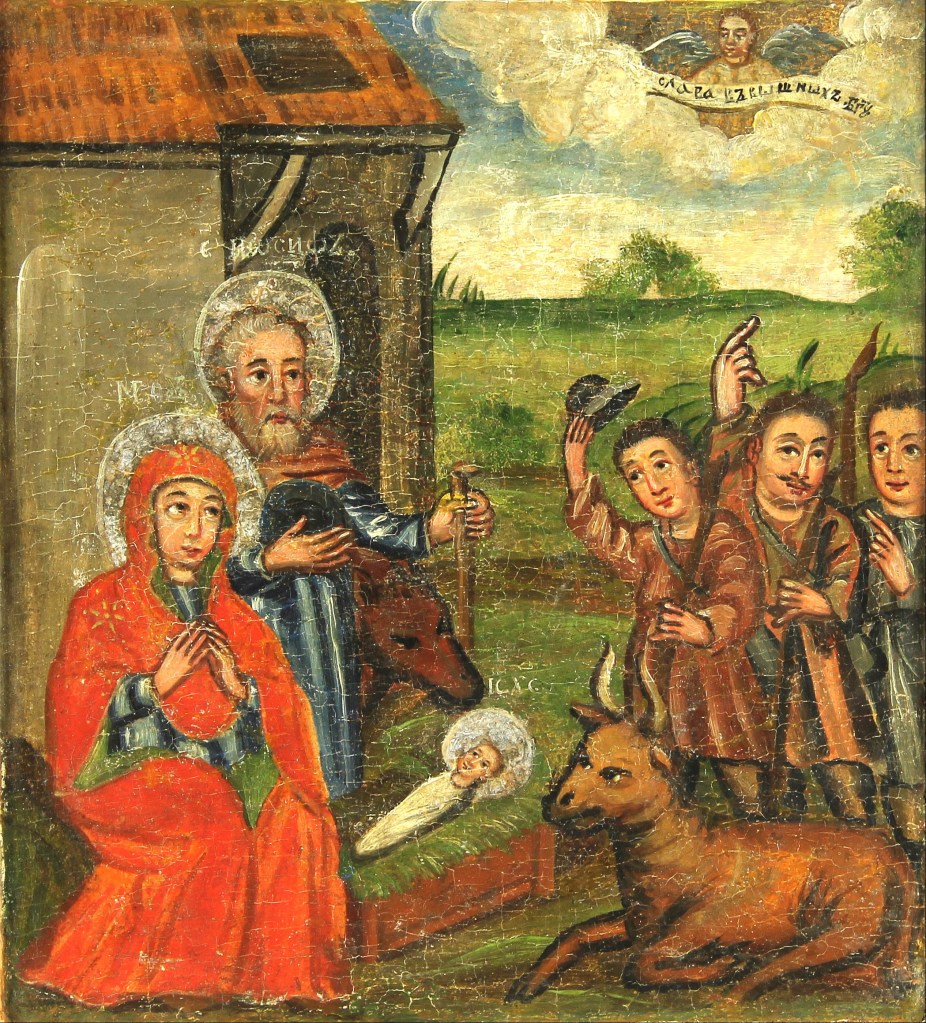
This year I have been struck by the people who received the message of the birth of Jesus – the shepherd. Alone, in the silence, in the wilderness, they receive the message of the angel that the Saviour is born. Away from everyday business, in the darkness, they are confronted by the reality that God’s love is embodied in the Baby.

We sing about it! But until this year I never really thought about the context. The shepherds, in the desert, are a precursor for the contemplative. In the silence of the wilderness of “me”, the contemplative meets a person – the embodied love of God! Like Jacob, the contemplative does not wrestle with God until they are alone with God.

So I have been thinking about various things in my life. I would like to create a context for contemplation. A context for Jesus alone. I struggle with an imperative to share the fruits of that contemplation – is it real? I have also been reading a book about the Brethren of the Common Life and a different book on Thomas à Kempis. Is there an imperative for inwardness that I have been called to within an “unusual framework”?

Anyway, I pray you have had a blessed Nativity of Our Lord.
solitude

… their purpose is no longer being to arouse desire but to gratify it.

Alred of Rievaulx, Rule of Life for a Recluse

I remembered the above quote as I was reading today. I think Alred is thinking in terms of speech – especially for those who have chosen to live a life as an anchorite – but I think it equally applies to reading.

When people say that they like to read I often wonder what they mean?! I think there is a strong desire for escapism in reading. It can take you to faraway places and to situations very different from the one you find yourself. Reading can also be used to pass time, to see what the rich and famous are doing, or to catch up on the latest gossip. I wonder what the “end” of such reading is?

I think when I think of reading I am thinking of something very different. Reading is about “arousing desire” for Jesus. It is not always the Bible or the Prayer Book that arouses that desire. Traditional literature on spirituality, or modern, can move the heart as well as the head. I often read only a few words of a good book and allow them to float around my head. (Yes, plenty of space for floating!)

The religious life can be very self-indulgent. Solitude is not the absence of people – a religious form of misanthropy – but being alone with God. Solitude is a desire to be alone with Jesus. Solitude is a luxury to enjoy the presence of Jesus, to live in the Son, to sit and listen to Jesus.

religious life?

I have been returning to an older theme: religious life. And I have been thinking about two quotes in particular that, I think, say the same thing.

Life in Religion is the ultimate wager on the existence of God. The Church should always be engaged in doing things that make no sense if God does not exist. This is the reason why I hold the Religious life in the highest esteem … the monastic life models for all Christians what it means to live fully and abundantly, with and for Christ.

The Most Rev’d Justin Welby, Archbishop of Canterbury
Foreword to: Anglican Religious Life 2016-17

Of this there is no doubt, our age and Protestantism in general may need the monastery again, or wish it were there. The “monastery” is an essential dialectical element in Christianity. We therefore need it out there like a navigation buoy at sea in order to see where we are, even though I myself would not enter it. But if there really is true Christianity in every generation, there must also be individuals who have this need.

Kierkegaard, Nov 1847

I am always amazed that Kierkegaard, living in 1800s Lutheran Denmark, writes at length about “the monastery” in his journals. What experience would he have had of religious life? What books would he have read? And, in some ways, his very life is an example of what he said above – even if he does not want to enter a monastery.

To put it another way: people need to take the “single individual” to the extreme to show other people what it means to be the “single individual” – “dare to desire Jesus alone”. I am seeing that reality more and more. Like yeast in the dough, individuals need to place all their eggs in the one basket (sorry!) and say, “what if all of this stuff about God is true?”. And much more: let’s take Jesus seriously and actually follow Him alone, pick up our cross and live a life of love.

I think both of these quotes call us to “new monasticism” (to introduce yet another person’s quote). Not looking to the past alone but using the past to live today for Jesus alone. Yes, the church as a community and especially individuals within the Church need to do things that make no sense if God does not exist. Individuals need to take Jesus seriously.

when?

I have had a late start today. Nothing in particular just struggled to get going. So I have said Morning Prayer later than usual. The reading was from Matthew 12 and ended with these verses:

I tell you, on the day of judgment you will have to give an account for every careless word you utter; for by your words you will be justified, and by your words you will be condemned.”

Matthew 12:36-37

At what point does silence become a vocation versus a form of escapism? When is it a psychological problem and when is it a calling from God? Sometimes, I think, it is extremely hard to tell. And if it is a personal preference, did God put it there for Him?

I read the Cloud of Unknowing yesterday and it repeats a simple theme:

This work is fundamentally a naked intent, none other than the single-minded intention of our spirit directed to God himself alone.

So can we speak of a general vocation that is worked out in a particular context? I desire Jesus alone and He calls me to solitude and silence? The context may change but the “desire” is always the same.

anglican anchorite?!

Sometimes I stumble upon things, without even trying, which makes me think God is at work.

Yesterday I stumbled across Martha Reeves who goes by the “pen-name” of Maggie Ross. Reeves is described as “a vowed Anglican solitary (or anchorite)”. She has written a number of books, not least of which is a two-volume set titled, Silence: A User’s Guide.

But it gets better! She has a blog, Voice in the Wilderness. Yes, an anchorite within the Anglican tradition who is active online. There are a number of YouTube videos of conferences she has given and an article about her life.

And here is a quote to end this post:

The Desert Fathers and Mothers tell us that we are never less alone than when we are in solitude.

anchorites in England

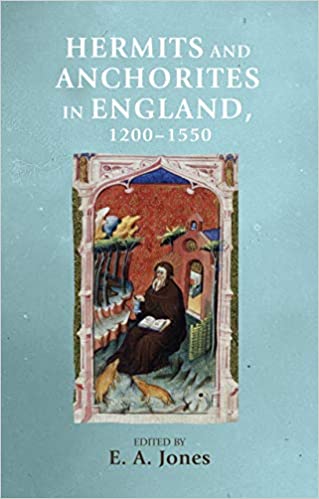
I have been reading Hermits and anchorites in England, 1200-1550 by E.A. Jones. It is a collection of documents with an excellent introduction to each section. I have not read the part on hermits yet but the sections on the anchorite life are filled with amazing insights. I know there are books on continental anchorites, yet there is a part of me that thinks of it as the most English of religious lives.

So I have been thinking about the anchorite rite of enclosure. After some elements inside the church, the anchorite gets to watch their own funeral from their new home. Often their grave was part of their devotional space and they would watch the services inside the church from inside their grave. Death is a reality for the anchorite, as it was, presumably, for everyone in the middle ages.

Not a particularly happy thought for a Sunday afternoon. But the connection between the eucharist, the death of Jesus, and my own death are worth considering. Kierkegaard writes that at the altar (when we receive Communion) we are truly alone. At that moment life and death become one moment. To live for Jesus is to live in that tension between death and life.

Anyway …

vocation?

What I really need is to get clear about what I must do, not what I must know, except insofar as knowledge must precede every act. What matters is to find a purpose, to see what it really is that God wills that I shall do; the crucial thing is to find a truth which is truth for me, to find the idea for which I am willing to live and die.

1 August 1835

I have been thinking a lot about vocation. Do I have one? And if so, what is it? Is it from me or from God? What if I tell people and they laugh?

This morning I thought about one of the earliest pieces that people normally read when they start with Kierkegaard – the journal entry for 1 August 1835. And, in particular, it is the end, “and die”. Is the vocation something I am willing to die for? Or, to put it another way, am I willing to live it for the rest of my life? No matter what the cost. If so, whether the church says it is a vocation, or other people, because less relevant. Yes, God speaks through others! But am I dedicated enough to stick it out to the very end even under opposition.

And then I thought about a quote from a book I have been reading (which I think I have shared before):

And it is in this sense that it has been rightly said that monasticism is a kind of substitute for mar­tyrdom.

I am not sure what a “substitute” means in this context. And I know that various forms of monasticism have sometimes been called “white martyrdom”. So putting it all together I am still as clueless as always!!!

ultimate wager

Life in Religion is the ultimate wager on the existence of God. The Church should always be engaged in doing things that make no sense if God does not exist. This is the reason why I hold the Religious life in the highest esteem. Through the commonality of goods, the life of obedience and above all the commitment to shape life around the Opus Dei (that is, prayer), the monastic life models for all Christians what it means to live fully and abundantly, with and for Christ.”

The Most Rev’d Justin Welby, Archbishop of Canterbury
Foreword to: Anglican Religious Life 2016-17

I have been thinking about the above quote a lot.

new monasticism?


Father, I abandon myself into Your hands, do with me what You will. For whatever You may do, I thank You. I am ready for all, I accept all, let only Your will be done in me, as in all Your creatures: I wish no more than this, O Lord. Into Your hands I commend my soul I offer it to You with all the love of my heart. For I love, You, my God, and so need to give myself, to surrender myself into Your hands without reserve and with boundless confidence, for You are my Father. Amen.

Prayer of Charles de Foucauld

I found the above on an Anglican website about the religious life. I have been reading a number of these and finding them very helpful. I have created a page (Anglican Religious Life) that has links to various communities and “committees”.

Anyway, I will leave you with that for today. Have a Jesus filled day!!!