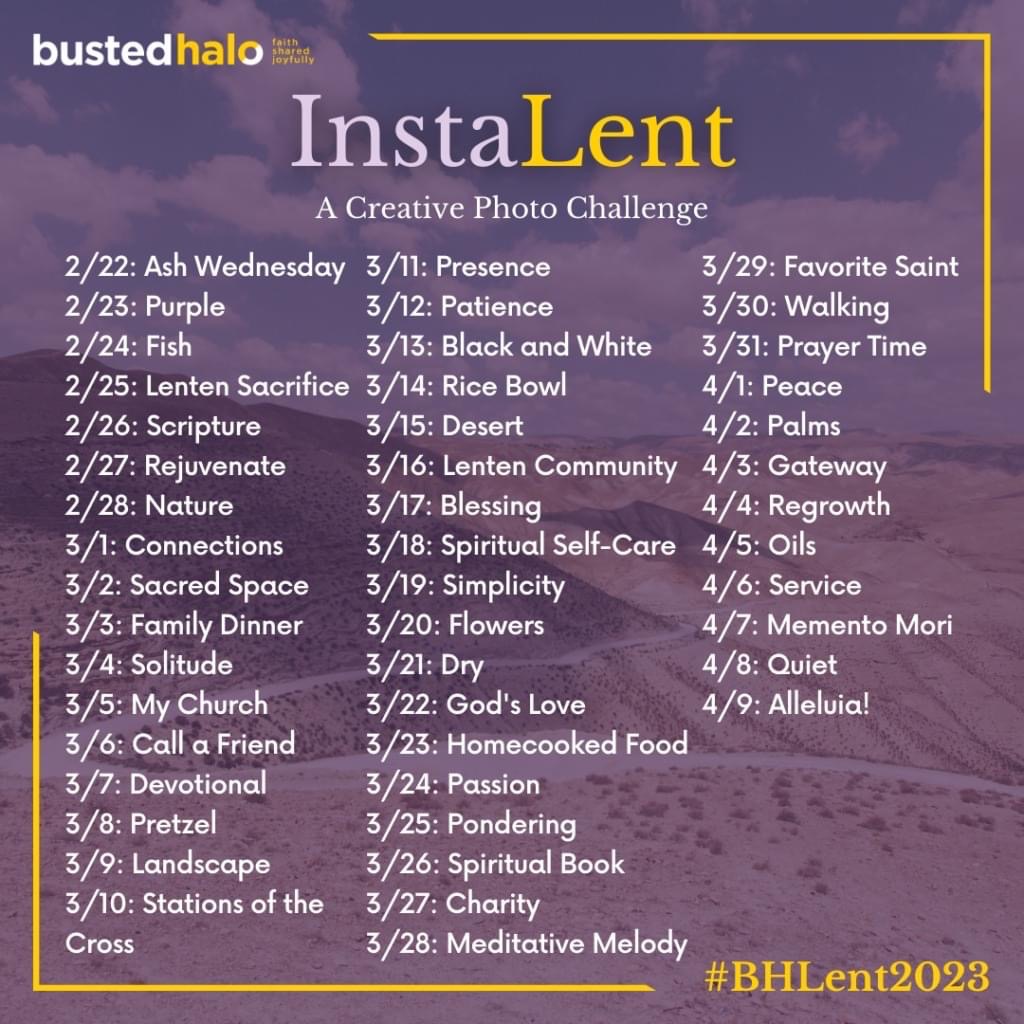
BustedHalo has an InstaLent photo starter. Great idea so I will do it on my Insta and here.
BustedHalo has an InstaLent photo starter. Great idea so I will do it on my Insta and here.
The world values Religious Communities for their work: Christ values them for their love.
Henry Power Bull SSJE
I have been trying to organise some thoughts around the religious life. And I found this quote:
The liminal space is an invitation to surrender – an invitation to give over to something larger than self and trust that we will be held and supported with whatever we need in order to navigate the uncertainty. The degree to which we are comfortable or uncomfortable has to do with how we choose to be with what is happening. We can choose to fight against the liminal space and struggle, or to flow with it by listening, sensing, and responding.
The Liminal Space – Embracing the Mystery and Power of Transition from What Has Been to What Will Be
Maybe the older mystical writers would call it “the cloud of unknowing”? There is a sense in which the religious life, or Christianity as a whole, is a “what if” life. I think the current Archbishop of Canterbury said that?!
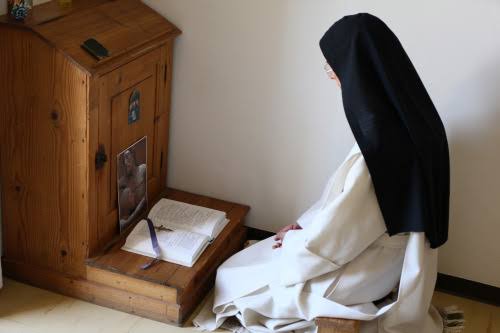
I am having one of those days. But this picture makes me smile (a little).
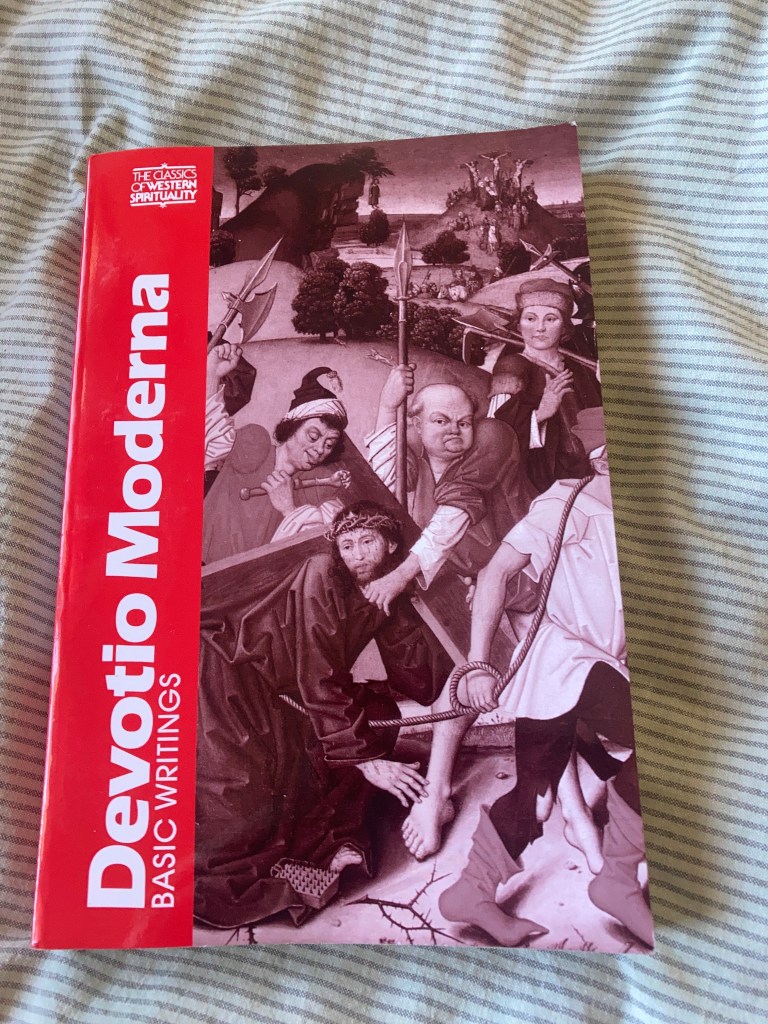
I have been reading Devotio Moderna: Basic Writings by John Van Engen. I have been waiting for it to arrive for over a month. There is a collection of “Resolutions and Intentions” by the founder of the Brethren of the Common life, Geert Groote, in the book. There is a decisive fell that this is not a set of vows or a rule of life but rather a way to live. I like the idea of religious life without vows beyond those of all the baptised. We are all called to “love God and love our neighbour as ourselves”. The religious life is not for the “spiritual elite” so why ask any more of the religious than of all the baptised?
So I thought I would follow that through a little. What does the noun “resolution” mean?
noun: resolution; plural noun: resolutions
1. a firm decision to do or not to do something.
Similar: intention, resolve, decision, intent, aim, aspiration, design, purpose, object, plan, commitment, pledge, promise, undertaking
A resolution is connected to an intention. Both are a decision to set a path and walk it. There is no certainty in the resolution – no end result. But rather it is for the moment. A resolution needs renewing every new moment – it is a way of life rather than a point in time. And there is no room for doubt – I am either going to do it or not.
So vow to love, be resolved to live for Jesus only?
“Contemplata aliis tradere” is a Latin phrase which translates into English as “to hand down to others the fruits of contemplation.”
Contemplata aliis tradere
I am not a great advocate for St Thomas. In fact, the scholastic thing is very foreign to me. But the above has always torn at my heart. In the books about anchorite spirituality and life I have been reading, there is agreement that it is about contemplation. But what then? Just sit in the warm glow of a job well done?
Last night, while driving home, I had a long think about the above. And I came to the conclusion (or should that be resolution) that it is less important what it meant to people of the past than what it means for me today. Yes, I think I have a moral duty to share those fruits of future possible contemplation. And whether that is through a blog like this, a podcast, or some other way, there is a duty to make that available to people.
So a life set apart to pray and read, to think and contemplate, and to share. Not to have the answers but to be present with people and witness to the transforming power of Jesus. Maybe the word “witness” puts it better than share? It is not a treasure I have within me but rather a Person.
Anyway …
I heard this song in the car on the way home from youth last night. I remember listening to it on repeat about this time last year. I was thinking it was a good(ish) Easter song!
I was thinking (in the car) that it is one thing to say you desire only Jesus (for the exclusion of others) and actually living it. I guess that is why it is a “sacrifice” in the Romans 12 sense?! And, in being alone for Jesus only, to love people for themselves and not for their usefulness.
I think it is Cassian who talks about the motivation behind people joining religious communities. Some for fear of the past (penitence), some waiting for a future (salvation), and a small number for the love of God now.
I was thinking that the desire to be alone can come from very selfish motivation. Either I am so bad that no one wants to be with me or I am so good that no one can come close to me. I often do things for completely wrong motives, even the good ones. How do I desire Jesus alone in a real sense in reality?
I am happiest alone: reading, praying, thinking. I have really discovered that in the last month or so. It makes me act different around people. (Ok, even more awkward than usual!) But is that self-defence because of chemicals in my brain or is it a spiritual calling?
Christianly, struggling is always done by single individuals, because spirit is precisely this, that everyone is an individual before God, that “fellowship” is a lower category than “the single individual,” which everyone can and should be. And even if the individuals were in the thousands and as such struggled jointly, Christianly understood each individual is struggling, besides jointly with the others, also within himself, and must as a single individual give an accounting on judgment day, when his life as an individual will be examined.
Practice in Christianity
I have been thinking about the above quote, especially, ”fellowship” is a lower category than “the single individual”. A number of the books I have been reading speak of monasticism in terms of “community”. I feel community is important but is it the “prime category”? It is the paradox of faith in Jesus: I learn from the community but I am alone before God.
Anyway …
The conclusion of belief is no conclusion but a resolution, and thus doubt is excluded.
Philosophical Fragments
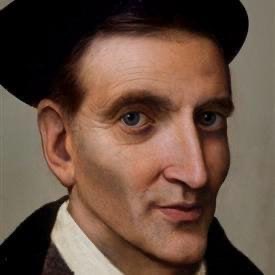
I woke in the night and the above quote came to mind. A little on the weird side, I agree, but it all came together.
I have been reading a book about Thomas a Kempis. In this book, there is a discussion on the origins of the Brethren of the Common Life and, especially, the founder, Geert Groote. Groote wrote “Resolutions and Intentions” which was like a Rule of Life but without any vows. And it was common practice in the Brethren for individuals to write such a document and not take religious vows in the traditional way.
The above now makes even more sense to me. Live life without vows or a Rule but live with a clear resolution. Allow life to be shaped by this resolution but make no show of it or put yourself under vows.
So, in the history of the church, there is a way to live a converted (religious) life as a layperson without entering a monastery.
And, as an aside, I really like SK’s side-step on doubt in the above quote!

