be transformed

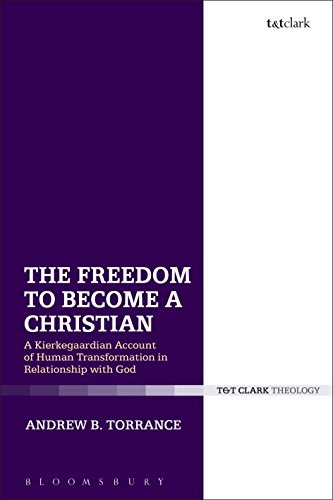
… it is conceived as a transformative journey that is grounded in an active relationship with the God who is present with us and encounters us in and through the person of Jesus Christ. Furthermore, it involves a growing in relationship with God that does not simply result from God’s encountering us from the eternal beyond but takes place concretely within the history of this world. Accordingly, becoming a Christian requires responding to God’s historical engagement with us within the limitations of time.

The Freedom to Become a Christian, 2.

I have been reading The Freedom to Become a Christian with much interest. I think it discusses some issues that need to be discussed more – a theology of conversion. Further I think this theology of conversion should stand in the middle of our theology of mission. So I might share one or two quotes from the book as I progress through it. I am also hoping to write a full review and discussion of the book when I am done.

sometimes …

… I find things by accident but it is really by Providence. Today I was going through some “tags” I follow. I was happily reading someone else’s story and stumbled upon this quote:

My instinct is to defend myself. Yet the Holy Spirit whispers, “Make peace with the fact that you will be the villain in someone else’s story.”

ACCEPTANCE OF REJECTION

Yes!!!! That is me today. I needed to hear that!

I woke up sad. Some to-and-fro last night that left me emotionally exhausted. And I am struggling with the guilt of not doing more or trying harder. Simply getting through the day has been a struggle the last couple of days. It is all numb and emotionless. Yes, I am someone else’s villain. But the constant struggle is exhausting. I want to move on but God has other ideas – or, a least, I hope He does.

So, thank you to the author of reconcilingthings. I will be back!

internet christian?

I have just finished season 2 of The Devil you Know. It has been extremely interesting and made me think.

Season 2 looks at the internet cult around Sherry Shriner. What made this show interesting for me was how a person created a cult that is wholly on the internet! People go searching for answers online – to “google” has become a common verb in English. And, as the show points out, the algorithms on social media sites, and especially on YouTube, place people into a filter bubble – a context of confirmation of their assumptions. A person who watches a clip of a particular theory while be directed to other clips that confirm that theory.

What really made me think is that “cult” have worked out how to use this, why haven’t the people of God? Instinctively Shriner knew how to built community online and how to control people through that community. And how to use confirmation bias to move people to action. Yet the church is stuck in trying the same old things and wondering why it does not produce new outcomes!

I think this is worth exploring further!

wrong answers?

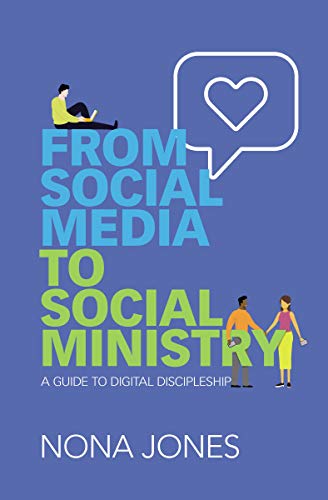
I have been reading From Social Media to Social Ministry. I am always a little hesitate of books that claim to be a guide or an answer. Often these books have a good analysis of the problem, it is just the step-by-step answers that leave me a little disappointed.

The book is written for an American evangelical audience, all of which I am not. Yet there are some real gems in the mess. (See someone does agree with me!)

The data links the decline to one main thing: a perceived lack of relevance. And relevance isn’t only a question of your message; it’s also a question of your method.

Jones, Nona. From Social Media to Social Ministry

I think a major problem for modern churches is that they are answering questions that no one (except them) is asking. In reality what person outside of the church is interested in what you think the Bible is, or how your escatology connects with your Christology? Some Christian communities behave more like cults (world evil, us good) than loving followers of Jesus.

While the data is not as convincing as the author makes out, I think that the basic point is solid: are churches answering questions people are asking? Or is the church shame-blaming people outside of the church for not asking the right questions?

Jesus connected with people. He used parables (word pictures) for people to experience Him and the Kingdom of God. Jesus used images that people were familiar with and related to. So fundamentally are modern churches building community around an argument, an idea, or around the Person of Jesus?

a witness

The true knight of faith is a witness, never a teacher, and therein lies the deep humanity that is worth more than this frivolous concern for the welfare of other people that is extolled under the name of sympathy but is really nothing more than vanity.

Kierkegaard: Fear and Trembling (Cambridge Texts in the History of Philosophy), 70

Faith cannot be taught but only “caught”.