tranquilises itself in the trivial

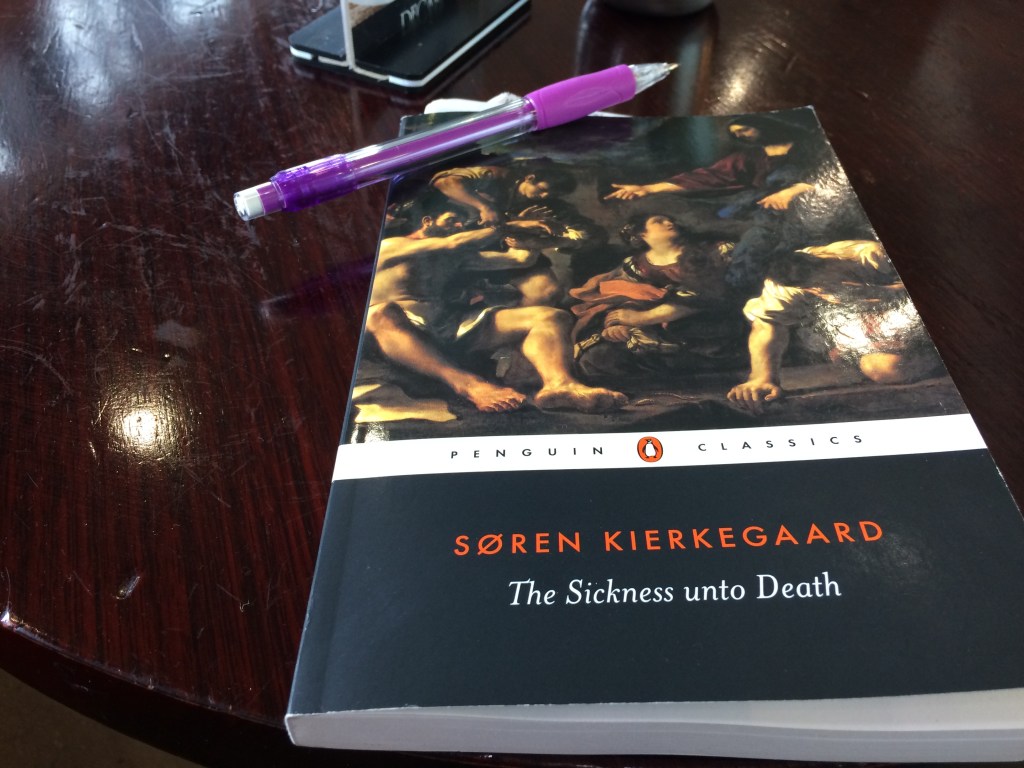
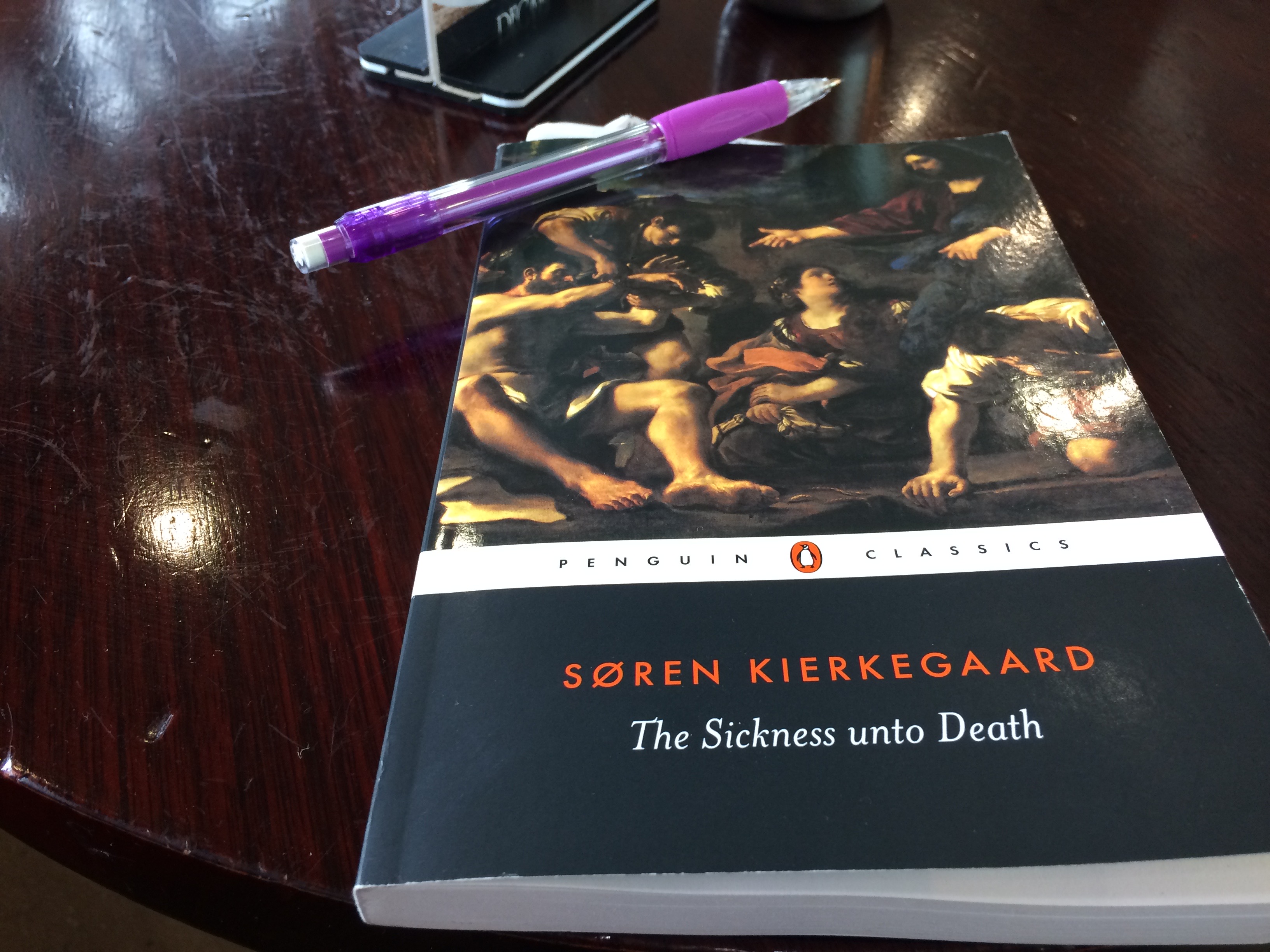
I had some time this morning so I sat down to drink my coffee – rather than do it on the run between various duties. I read Kierkegaard’s world part 8: God and possibility by Clare Carlisle. I think I have read it before. I know I have listened to an audiobook version of the whole series.

I was struck by the following quote:

In The Sickness Unto Death, the despair that lacks possibility is described as ‘spiritless philistinism’, which both “tranquilises itself in the trivial” and “imagines itself to be the master”. In our own world, this takes many different forms: the reduction of spiritual teachings to rigid dogmatism; the commodification of romance; the stifling of intellectual life by a fixation on measurable “skills”, “outputs”, and “impacts”.

Kierkegaard’s world part 8: God and possibility, Clare Carlisle

Since I had a copy of SUD with me, I read the whole section where SK speaks about the imbalance (despair) of possibility and necessity. The psychological insight that SK offers often amazes me.

In my own context I have often been struck by how people will escape into the trivial – minutiae – of a particular issue. And become addicted to their point of view. I am not saying I have been, or am, immune! I like to escape. But my own experience of myself and of other people has really highlighted this “despair” of the actual over the “what could be”.

SO I have set myself a task: start dreaming more! Worry less about the mess and the problems, and start seeing the possibilities of my daily life. And in those possibilities see God working for and in me.
Where to?

I have been thinking about where I am intending to go with this blog (and hopefully the podcast). I really do not want to convince anyone of anything. I have no product to sell, no idea to proclaim, no party line to defend. I have absolutely no authority except my lived experience. Yet I know that life comes with many questions and many different answers to these many questions. And somehow I would like to be in that mix – helping finding answers rather than giving answers. So where to from here?

So while I was reading I came across this quote from SK about his task as an author:

“I dare not call myself a Christian; but I want honesty and to this end I will venture”

Søren Kierkegaard

THAT IS IT!! Be honest with yourself. I want to be honest with myself and I want to help people be honest with themselves. I really do not care where you stand (right, left, gay, straight, theist, atheist, Catholic, or Protestant) simply be honest in your own position. And make it that – your own position! I do not accept negative positions – “I am [X] because [Y] is wrong”. But I do accept that all positions have a sense of paradox and individuality to them. So “it is right for me” is an answer and a reason.

So there it is! A new year and a new direction. So this year I hope to post a little more regularly and a little longer posts. And, of course, I will post some new podcast episodes.

Some SK insights

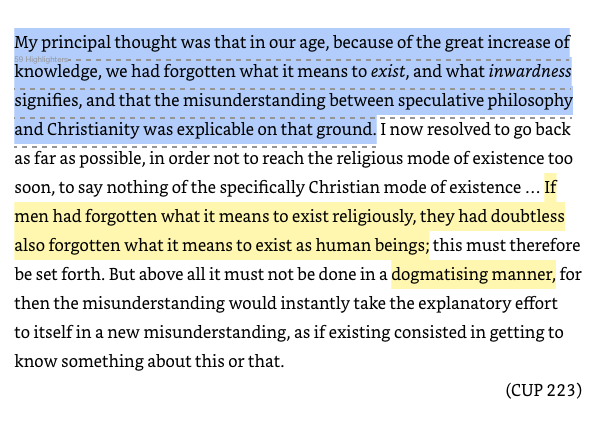
I read a great article on SK and possibility this morning. It is especially useful since I am reading Sickness unto death. Anyway, here is a quote:

The important step for Kierkegaard is the concept “before God”. This is a Christian concept. He sees this actuality, standing in prayer before God, or becoming contemporary with God, as the highest for any Christian. Here the possibility of the offense is present, and must be ever-present. But here also the possibility of being able to become a believer  is present and is ever present.

SK & Possibility

The great risk in possibility is also the risk in faith.

Asking questions

One of the moral diseases we communicate to one another in so­ciety comes from huddling together in the pale light of an insufficient answer to a question we are afraid to ask.

Thomas Merton, No Man is an Island.

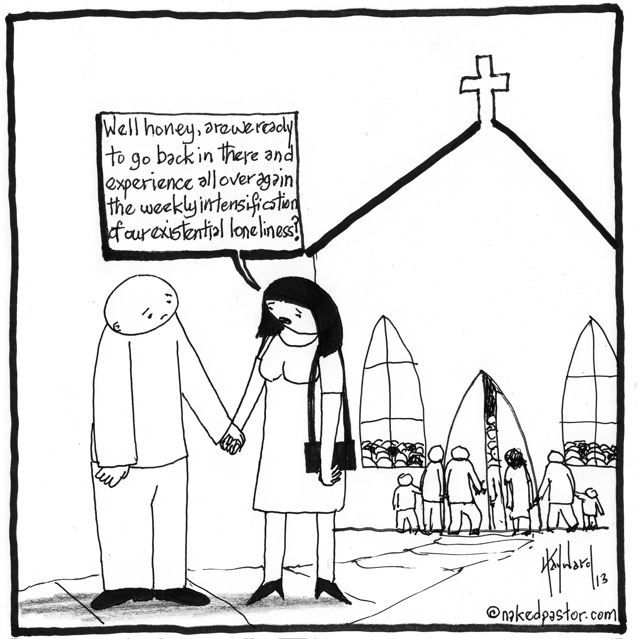
The pastor at the church that we attend likes to use examples from modern movies to illustrate his point. He does not actually listen to the questions being asked (by the movie) but rather is looking for validation of his point. They are not the question that the particular movie is asking but rather a “this person agrees with me” type of thing.

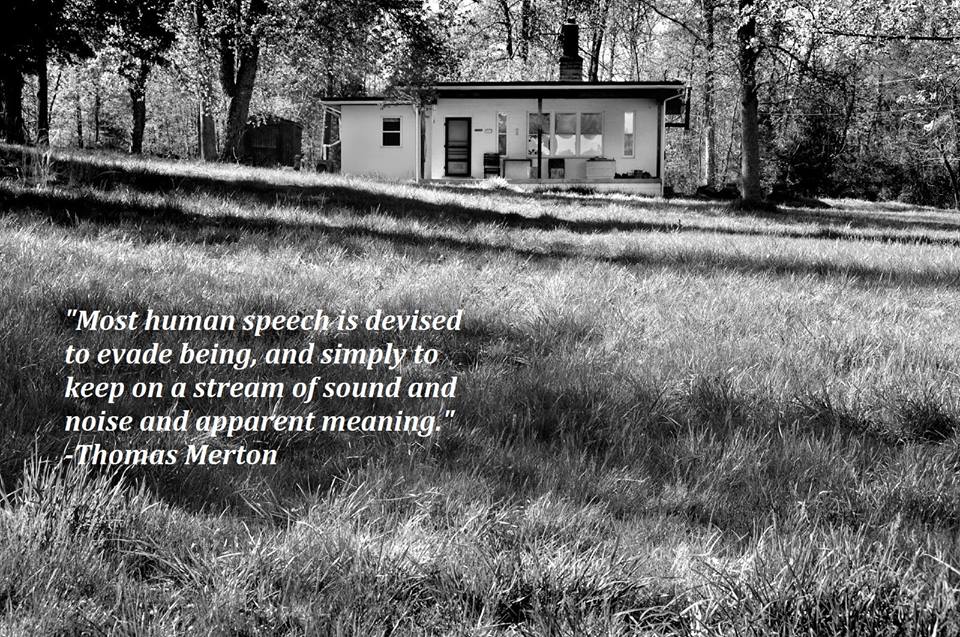
I think Merton is right – we are afraid to ask the difficult questions because asking it may reveal something about us. We like, rather, to gather around easy answers to difficult questions. Or, we like to escape the question by simply gathering round cliches. Or maybe we hide behind an “authority” and simply call for “blind faith”. 

Anyway …

Inside vs outside?

“A man who as a physical being is always turned toward the outside, thinking that his happiness lies outside him, finally turns inward and discovers that the source is within him.”

Soren Kierkegaard

I often think about SK’s “inside vs outside” at the start of Either/Or. I especially think about it when I listen to modern preaching. There appears to be a common understanding of religion that, simply put, emphases the external over the internal.  “Just be obedient, follow the rules” – learn the script to play the part! Or, in theological terms, there is an emphases on “Christ for me” over “Christ in me”. It often strikes me that modern religion calls me to give up “me”, to conform to a model (of worship, life, thinking, emotions, vocations), and then calls that obedience. 

Anyway, what would I know!