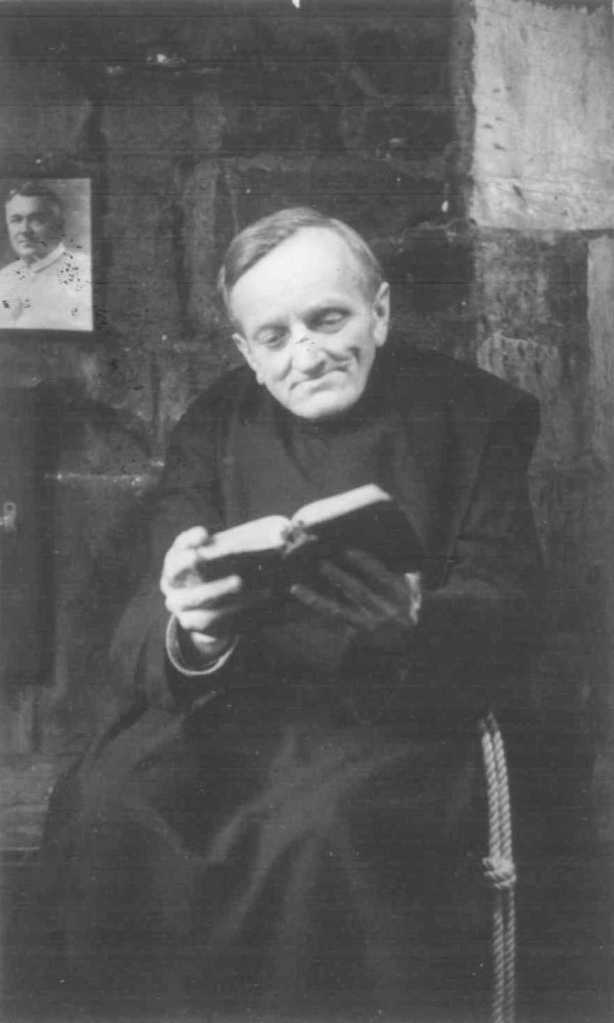
am i a criminal?

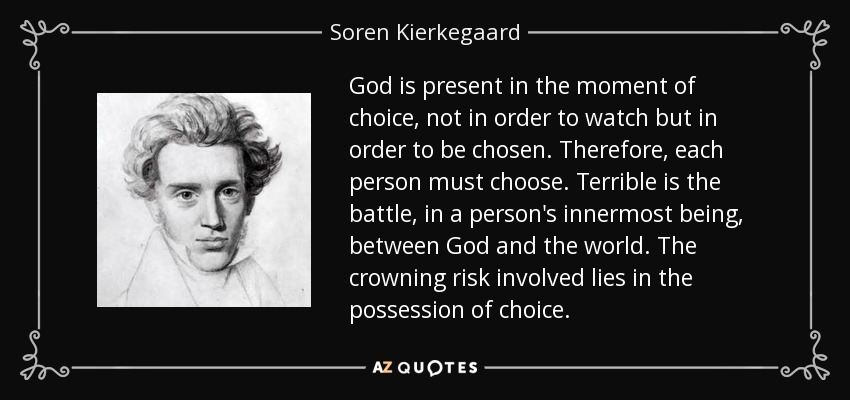
In antiquity as well as in the Middle Ages there was an awareness of this longing for solitude and a respect for what [solitude] means; whereas in the constant sociality of our day we shrink from solitude to the point (what a capital epigram!) that no use for it is known other than as a punishment for criminals. But since it is a crime in our day to have spirit, it is indeed quite in order to classify such people, lovers of solitude, with criminals.

Kierkegaard

I was reminded of the above quote from Sickness unto Death. The analogue that SK draws is really interesting. And, maybe, even more true today.

I am just a criminal who needs to be locked up for loving Jesus. And that is my understanding of heaven – Jesus and me alone!
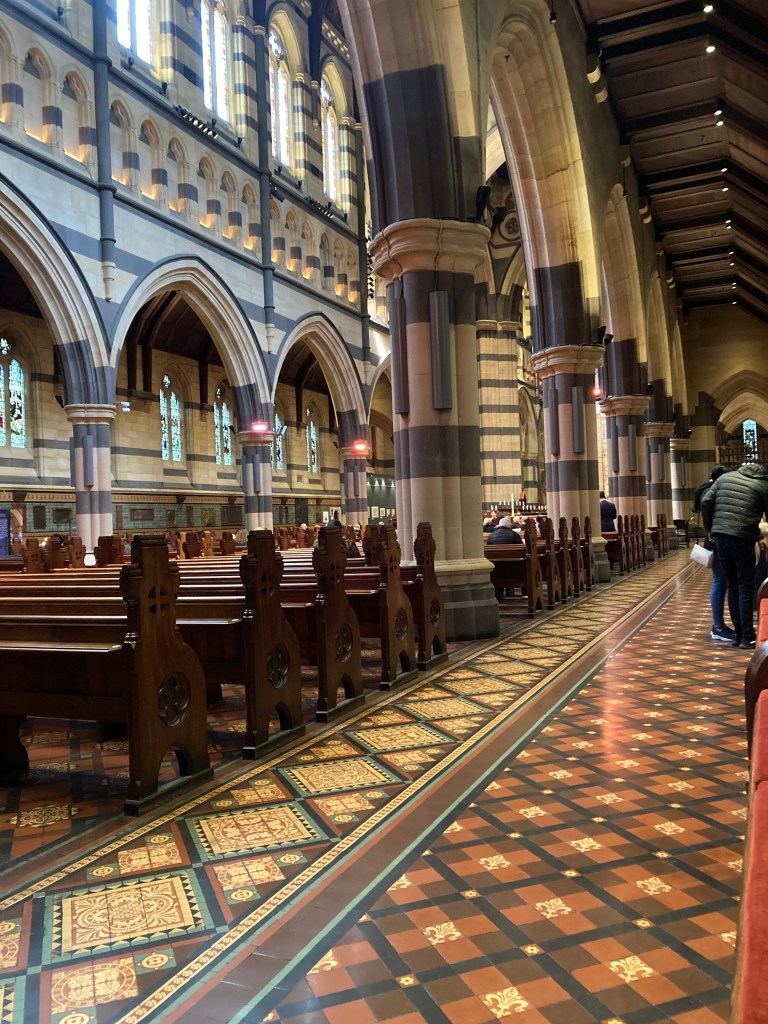
autonomous

I had a dream last night in which I was discussing the following paragraph from “A Handbook of the Religious Life”:

This autonomous vowed life has been recognised in the Eastern and Western Churches from earliest times as an authentic Christian vocation. Because it is not a life lived in community according to the norms of the Religious Life, it does not come within the normal scope of the Advisory Council; but since it has some similarities to the situation of Religious living under vows, bishops and others have frequently referred cases to the Council.

The Advisory Council for Religious Communities [in the Church of England]

The discussion in my dream was about the word “autonomous”. The word is used in the Roman Code of Canon Law in regard to religious life. It is defined (by one website) as:

… having the freedom to govern itself or control its own affairs.

The Roman Code of Canon law defines it in this way:

A just autonomy of life, especially of governance, is acknowledged for individual institutes, by which they possess their own discipline in the Church and are able to preserve their own patrimony intact.

Can. 586 §1.

So (to make a very long and complicated dream into a somewhat understandable post), autonomous vowed life includes freedom to govern (set up one’s own rule of life), freedom to set discipline (set up a cycle of prayer etc), and freedom to bring one’s past into the vowed life (preserve patrimony).

The autonomous vowed life is therefore freely lived in communion with one’s bishop.

writing?

Yet again I have let this blog slip. Life has been a little emotional and I have struggled. In fact, the one thing I thought I could always return to, prayer, has become very hard. But life moves on and things are changing. I have had a sleep-in today and now am planning on reading a book about village life in a medieval English village.

Yesterday I read an article on anchorites which included this quote:

Manual work, for its part, can keep idleness and sloth at bay, and profit your neighbours in charity. And in particular, the writing of material that is holy and edifying to read seems commendable.

Speculum Inclusorum

The article states that Speculum Inclusorum is written for anchoresses (sic!) but I am pretty sure it is for priest anchorites. It is the one English guidance literature with which I have not had much to do. It is on top of my list of books to acquire in the future.

So, the above quote is about what an anchorite “does”. And I like that writing of “edifying” material is mentioned. In a modern context, with all the ways that one can write, it must be a very suitable and proper thing to do. Like the Carthusians, I think certain anonymity needs to be maintained. But it is a way of sharing the fruits of the life. Also, in the village people came to the anchorite for advice and counsel so maybe the internet is the modern village?!

mary?

A woman in the crowd raised her voice and said to Jesus, ‘Blessed is the womb that bore you and the breasts that nursed you!’ But he said, ‘Blessed rather are those who hear the word of God and obey it!’

Luke 11.27, 28 (from Morning Prayer)

Today is the festival of The Blessed Virgin Mary, or Mary, the Mother of Our Lord, or the Assumption of Our Lady. I feel like sometimes Mary is misrepresented in popular devotion but I cannot deny that she has a special place in God’s plan of salvation. I have no theological problem with the rosary (and the like) but they are just not for me.

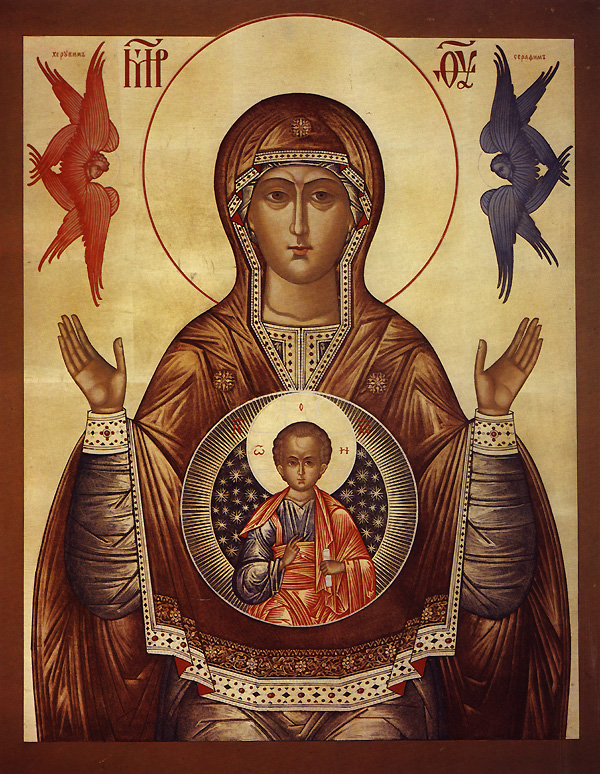
Early English anchorite writers often speak of the womb of Mary as the first enclosure of Jesus. The second, of course, is the tomb. So I am offering this icon for today’s festival:

now!

I have not posted in a while. I have been emotionally exhausted and had an event that caused me some anxiety. But things are now returning to some form of routine.

I have been working on the Bible Study for this week – Luke 12:49-59. It is an interesting passage. On first reading, it sounds harsh. But, as it unfolds, Jesus’ words are an encouragement to live absolutely for him today in the choices we make.

It reminds me of this quote from Kierkegaard:

Also, I should mention that I have had a delightful email from the Archivist at Walsingham. It is about the anchoresses who lived there.

so?!

So today has been a plodding start. I did say Morning Prayer. I have had breakfast and a cup or two of tea. But apart from that, I have done very little. I watched some videos on TikTok about religious life in Anglicanism. It must be a TikTok thing but all the videos are about nuns – men are not smart enough to use social media. If you are interested, follow me @anchoriteexperiment. I have had an issue with my eyes that makes reading a little more complicated than usual. Yes, I should simply wear my glasses but, you know, where are they?!

I woke up this morning thinking about the Rule of St Augustine, especially the opening sentence:

Before all else, dear brothers, love God and then your neighbor, because these are the chief commandments given to us.

Augustine wrote for a group of men (who were unable to use social media!) so forgive the opening. My thoughts, this morning, were wondering if the sentence should not say, “love Jesus and then your neighbour”. I have been called a “Jesus only Christian” before and I am never sure what that means. I often feel that we hide behind a coverall term, God, to escape the responsibility of facing that God in the life and death of Jesus. Jesus says, “Follow ME”, and not “Follow God”.

Anyway …

modern-day anchorites

I wanted to share this very good article: Living within four walls: A guide for modern day anchorites.

I think I need to adjust my ideas of solitude around a more inclusive idea of life. But this quote from Ancrene Wisse – a rule in English for anchorites – has the point that must be remembered:

What is a pure heart? I have told you before: it is that you neither desire nor love any thing but God only, and those things, for God, that assist you to come to him.

Ancrene Wisse

I think Kierkegaard would agree with the above.

anchorites and hermits

Anchorites tended to embrace a much more constrained physical stability so that they were  required to remain within a single small house or even a single room. Sometimes they were even locked or walled into such a place. Otherwise, however, both groups dealt with others (sometimes the degree of interaction was relatively extensive); similarly both were often approved to some extent by diocesan canons and local Bishops. Hermits (always men) who traveled from place to place were often granted the hermit tunic and permits to beg and preach by the local ordinary, for instance. But anchorites (who could include both women and men) lived their solitude within a fixed abode; hermits (who were, as you say, more marginal) could wander from town to town or otherwise live their solitude in less physically constrained ways. …

Because anchorites tended to live in the midst of villages with a window on the Church altar and one on the village square, they were often unofficial counselors, spiritual directors, a friendly pastoral ear, teachers, wisdom figures, preachers (as, again, were itinerant hermits), etc. Contrary to what you have concluded, while some were certainly secluded like the modern day Nazarena (oftentimes reforms were attempted by priests who wrote Rules for them limiting and regulating their contact with others) the very fact that such reforms were seen as necessary confirms that anchorites were, generally speaking, not so secluded as all that. 

Stillsong Hermitage

I think that is a pretty good starting point. While in modern Anglican terms both are Solitaries, the distinction is present in how life is lived.

I especially like the part about being “unofficial”. And being part of a eucharistic community and a secular community.