normal?

After my recent changes I had hoped that I would return to feeling normal. I was hoping for some sense of balance.

This morning I had an insight: what is normal for me? Do I actually have any idea what a balanced life looks like for me? This is the first time in my life – all 50 plus years of it – that I have had the space to find answers to the above.

In the past, and this is one insight that has become clear to me, I defined normal by other people. I thought I could trust people. I thought I could rely on love and mercy working through people for my good, for my normal.

So while I feel somewhat stuck, I know why.

vows as sacrifice

I appeal to you therefore, brothers and sisters, by the mercies of God, to present your bodies as a living sacrifice, holy and acceptable to God, which is your spiritual worship. Do not be conformed to this world, but be transformed by the renewing of your minds, so that you may discern what is the will of God—what is good and acceptable and perfect.

Romans 12:1-2

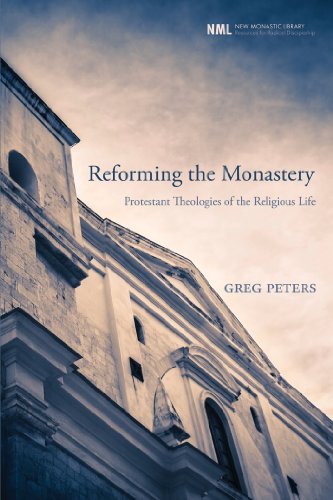
I have been reading a book on the theology of monasticism within post-reformation groups, Reforming the Monastery: Protestant Theologies of the Religious Life. Interesting! The Anglican chapter is especially interesting as it shows how different the English reformation was from its continental counterparts.

The first chapter looks at Luther and Calvin. Both have the same problem with monasticism: vows as works. The context is faith and works versus works in our relationship with God. So, one could say, Luther and Calvin are not anti-monasticism but rather against the taking of vows that are not directly related to our relationship with God.

But I think (and who am I to say anything?) that the above becomes less of a problem when vows are seen in terms of Romans 12: vows as sacrifice. I need to go much deeper than a superficial reading of the above – and I hope I can do that in the near future. I also realise that the very term sacrifice is a disputed idea. Above all, I am glad I am an Anglican (alas, a very poor one) because it allows the freedom to move beyond the above Reformers.

So allow me to put forward a working definition of sacrifice (that does not include death): a sacrifice is a free surrender of a good for a greater good. And the greater good in the above context is always Jesus. So vows as sacrifice would look a little like this: the free intention of the individual to surrender a good (created by God) for the greater good of living for Jesus alone. The intention is never to work towards salvation or away from my sin but rather an act of love for Jesus. And, by extension, an act of love for my neighbour whom I am free to serve in various ways.

Anyway!

anxiety?

So I have made some changes in my life. I think (maybe?!) I am ok with those decisions. But yesterday afternoon I had an anxiety attack. I know the signs and I know how to get through it without too much pain. I have strong physical symptoms (shaking and a sense of confusion) but breathing and being “real” normally restore some sense of balance.

I was reflecting on fear and anxiety. I once heard a sermon that stated (with much authority) that anxiety is just a stronger form of fear. It went on to speak about anxiety as a choice that people make and they can make an equal choice to simply not fear. I really struggle with that thought and the theology that backs it. In one sense, my anxiety is a physical response to chemicals in my head. In another sense, my anxiety is not like my fear.

In my experience anxiety is unfocused. Fear has an object – I am afraid of mice! But my anxiety is a general feeling of foreboding. It is not a fear of something but simply the feeling of being afraid. And, unlike my fear of mice from which I can walk away (that is, the mice), my anxiety is something inside me from which I cannot simply walk away.

So I am stuck with me. And that is the fundamental problem – me. Maybe at the root, my anxiety is all about my fear of people working out who I am? Or maybe it is simply my fear of me working out who I am? No matter what happens in life, one problem remains – me.

love?

Today’s sermon text was 1 Corinthians 13:1-13. I think the Vicar did a good job in trying to get her point across. It is one of those texts in which assumptions push their way into interpretation.

On the way home I was reflecting on the sermon. And I was struck by a pretty simple point: has love been a positive experience for me? In the sense of a human relationship that is truly human, has love been something that has shown God to me? The assumption when people speak about love – no matter how they may define it – is that it is a positive experience. The assumption is that being in love, being loved, is an experience that a human being would find fulfilling. I have felt love for other people but, on reflection, has it been love or infatuation? I have been, to quote a really poor song from the 80’s, “in love with love”?

I think I need to learn to love. I am not sure I have ever really known love in the sense of 1 Corinthians. Intellectually I understand that the love St Paul is speaking about is embodied in Jesus. And to Him I look! But in the sense of a human relationship, the paradox of being loved, I am not sure I have ever really experienced love.

Sorry if that is a bit of a downer. I know I will see things differently tomorrow – I always see things differently tomorrow.

from the inside out

“Despite the common desire to rise to the top, moments of essential change can depend upon a willingness to descend. A deep connection may be drawn between those who face the truth in themselves and the discovery of valuable pearls in depths of the ocean. Those who desire pearls must dive into deep waters; once there they risk darkness and isolation and the confusions of the murky depths. Similarly, those who would find the inner pearl must enter the treacherous waters of the soul and face the darkness found within. They must crack the hard shell of their little-self and come to know themselves from the inside out.“

Michael Meade, “Fate and Destiny”

I read the above on Facebook this morning. I have no idea who the author is or what the rest of the books is about. But I found the quote moving.

In next week’s gospel, Luke 5:1-11, Jesus asks the disciples to “go deeper”. The risk of self-knowledge and the challenge of the darkness! To be honest with yourself.

Anyway, just wanted to share.

new life?

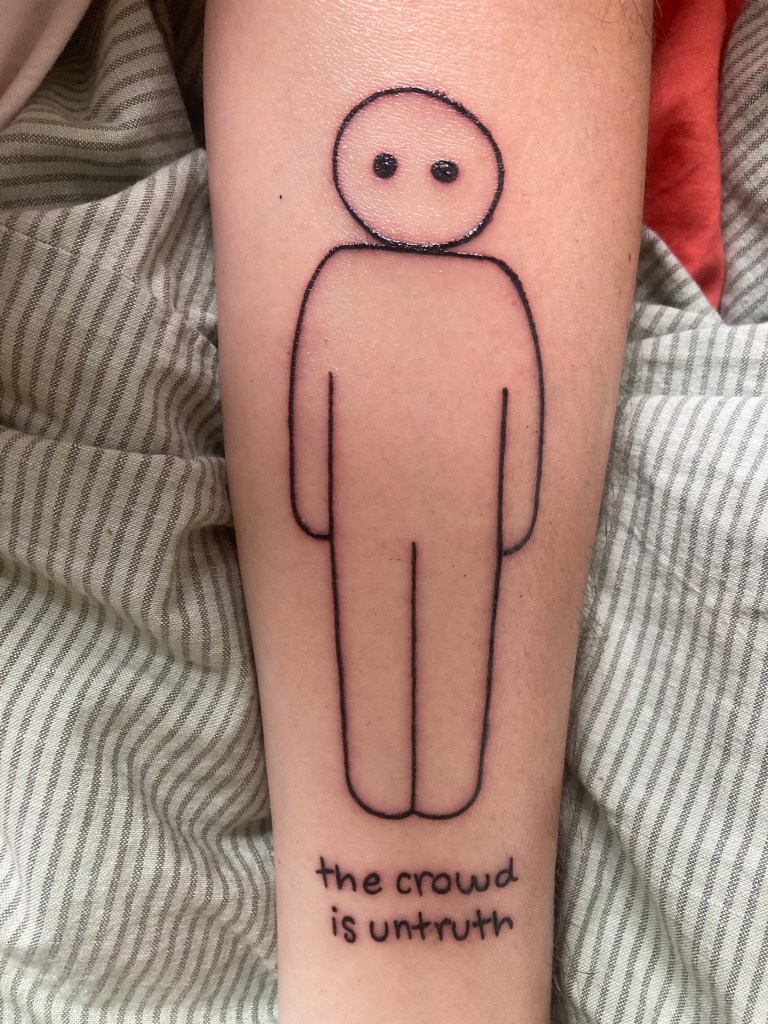
I have done the second tattoo thing. I managed to nearly pass out in the middle – it has been really hot and I needed a drink. It feels like a new start. But I had this nightmare and I woke up thinking, “What on earth have you done?”.

I do have a lot of negative feelings about what I have done. I am not sure if they simply need to be worked through or just accepted. I do feel like I have come to a threshold: no more wearing masks for other people. No more escaping into the crowd for identity – I am me. I am not really sure what that “me” is or what it looks like. I am super glad for the people in my life who help me try to see that “me”.

I do feel more optimistic about things. Like I can see a future now. Maybe I can really see a present? A moment when I stand alone with Jesus. I am still thinking about writing. Even just writing for me. Or doing something else?

Sorry, that is all very random.

follow me

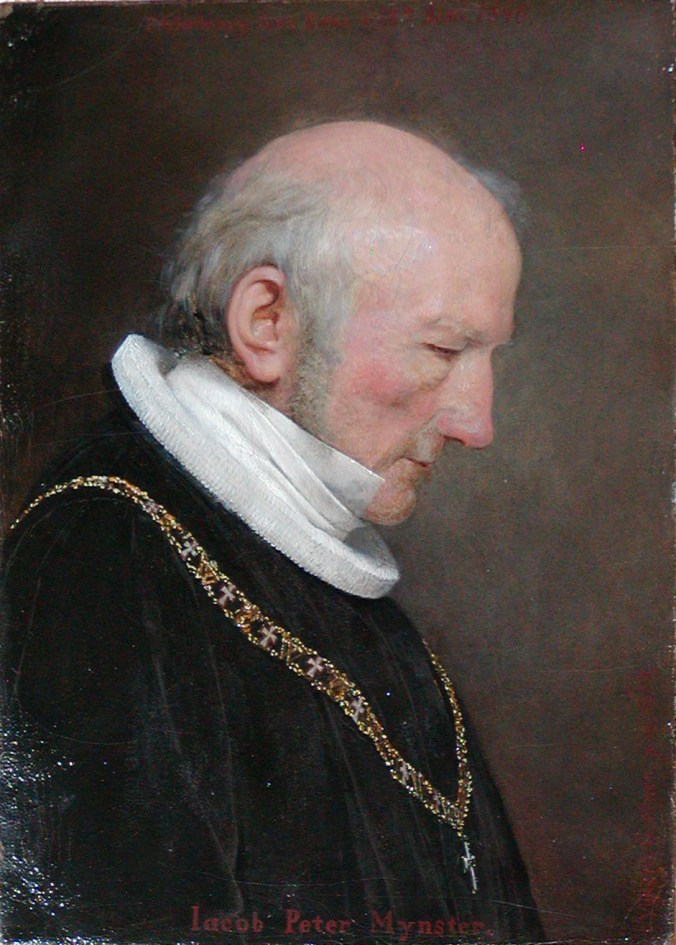
In retrospect, Søren and others would come to see the book as the beginning of his overt published attack on Christendom. Yet originally Søren had intended Practice in Christianity to be an aid to Mynster and a last-ditch defence for the establishment. The book offers extended reflections on various biblical passages where Jesus bids people directly to follow him without taking offence. The language is mild, exhorting, and Christ-centred. It is not fiery or angry. What it is, however, is a clear presentation of the need for the Single Individual to come out of the crowd and stand before Jesus without recourse to hiding behind the distractions of so-called Christian civilisation, either populist or cultured. The book includes a stirring “Moral,” offering the pastors and leaders of the church to confess their inability to preserve authentic Christianity and to throw themselves upon the grace of God. The primary person who needed to do the admission was the primate of the Danish Church, Bishop Mynster.

Backhouse, Stephen. Kierkegaard (p. 163). Zondervan.

Stephen Backhouse’s book on Kierkegaard is by far the best book for anyone to start their Kierkegaardian journey. I find that the narrative within the book – the narrative of Kierkegaard’s life – really resonates with me. The struggles to be a “me” in a mixed-up world. The above quote is about Practice in Christianity. It addresses one of the main points that Kierkegaard puts forward: Jesus saying “follow me” to each person alone.

I have something to decide and I really do not know what to do. I am letting it sit in the hope that an answer will appear. It is not yet urgent but it is part of a pattern within me that I find concerning. And it is exactly in this context that Jesus says, “Follow me”.

feelings

So here is an insight to me – I feel things very deeply but I rarely tell people how I feel. I think I have been conditioned to act that way but also I am not comfortable or confident enough to express myself. Interestingly, with word confident comes from two Latin words, “with” and “faith”. In the end, I do not have enough faith in myself – in the mystery and paradox that is “me” – to freely express my feelings to others.

I think that is also true about religion. I have tried to explain it rather than feeling it. Or rather, I have believed in something rather than someone. Maybe I am conditioned by a culture that elevates the intellectual over the emotional? Maybe I am too self-involved to see past my own nose? All the rational arguments for the spiritual does not make it a religion.

I was thinking today that the religion I have tried to enact and live is a pseudoscience of the metaphysical. Maybe a Hegelian version of the spiritual? Nothing is real but the rational and since God is real He must be rational. But that takes away the paradox and with it faith.

This morning, as I was looking through the Imitation of Christ, I was struck by this:

I would rather feel contrition than know how to define it.

Imitation of Christ, Chapter 1

Oh wow!!! Yes! There is an experimental side to religion – to Jesus – that I have dismissed as charismatic or pentecostal. But, in the history of the church, it is present in mysticism and contemplation. As a person who lives in their head, I want to get out of that space and feel Jesus in my experience. The paradox of Christianity is that it is a human relationship with the God-man, Jesus. So it involves all the elements of being human – mind, heart, spirit, physical, emotional, psychological. There is a part to every relationship between two people that is paradoxical – it is real but not rational. I still that very hard. My head tells me that no person would want a relationship with me but my feelings reach out to people.

There are still parts of me that have not even started to heal. The way I relate to others is one. Escaping that part into some form of solitude would not be healing but simply running away from the problem. I need to find that part first.
a new start

So today starts life 2.0. And I want to start it with a quote from a book I hope to be reading much more – The Imitation of Christ. I’ll make that my prayer for the coming months.

The teaching of [Jesus] is more excellent than all the advice of the saints, and [the person]
who has His spirit will find in it a hidden manna. Now, there are many who hear the
Gospel often but care little for it because they have not the spirit of Christ. Yet whoever
wishes to understand fully the words of [Jesus] must try to pattern [their] whole life on that of
[Jesus].

Imitation of Christ

life 2.0

So life has been super overwhelming. I have made a few decisions that I am proud of making but that are really scary. I have spoken to a number of different people along the way but the decision is my decision. So I am scared and excited at the same time. These decisions mean my life is changing and, in some ways, becoming more uncertain. Yes, I have taken a risk!

I was thinking of writing a post about someone who emailed me who has mistakenly assigned the term “hermit” to a person who was an anchorite. But I do not want to be negative. And I do not have the answers – a big lesson for me. I will not correct people!!!! Who am I to do that? I struggle to be me – the mystery of “me”. So who am I to suggest to someone else they are wrong (on such an insignificant matter)?

I am going to write about living with depression and anxiety. I am going to write about living for and with Jesus. I am going to write about books and ideas. I am not going to write about people (in a negative sense) and all the negativity that is floating around. If I cannot find Jesus in the situation, I am moving on!

I have designed a tattoo for Wednesday of which I am really proud. It actually says what I am feeling at the moment. I never in my life thought I would look forward to a tattoo but I am super excited about it. In fact, apart from religious occasions, this is the most excited I have been about anything. From conversation Christian culture (with conservative dress, speech, and attitude) to living with risk (Jesus) and tattoos.

So life 2.0 is starting!