a little Captain Obvious

If you could rewrite any book’s ending, which one would you choose?

I feel some dejavu with this prompt!?

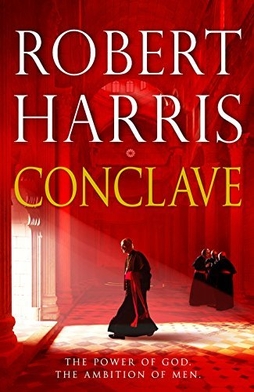
Another book I would rewrite, only a little, is Conclave by Robert Harris. It is a magnificent book, very descriptive and captivating. But it just did not need that ending. (A little Captain Obvious.)

But maybe it did and I just did not get it.

hair

What’s a promise you made to yourself that you’ve actually kept?

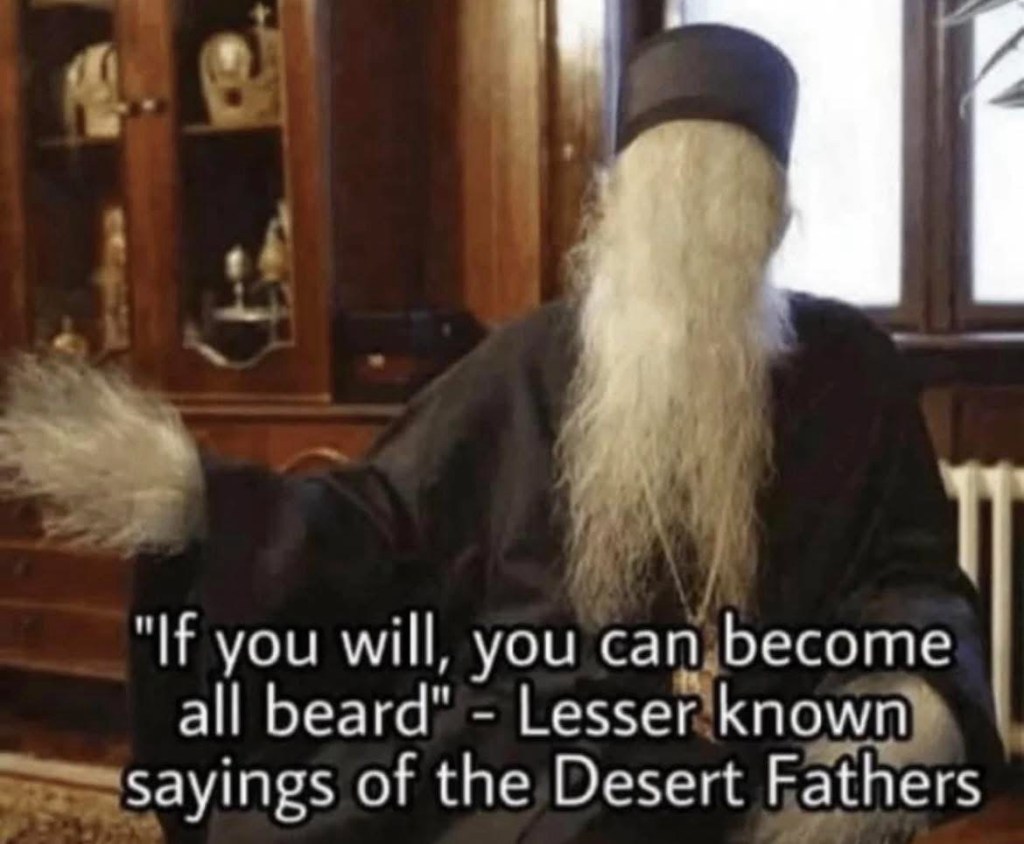
I made a promise (a vow?) that I will not cut my hair. How weird is that!? And I have kept it. For the first time in my life I have long hair and a beard. I am hair!

ebook reader!?

What is the best purchase you have ever made?

Maybe some physical books? Or an icon?

Yet the best purchase is my ebook reader. Yes I am tied to some universal overlord! But instant access to a book is priceless. I can carry a whole library in my pocket. And I can search that library. In fact, when my reader broke (or, I thought it was broken) I had to get another. Now I have two!

And, tbh, I would give my right arm for a colour version!

spirituality not religion?

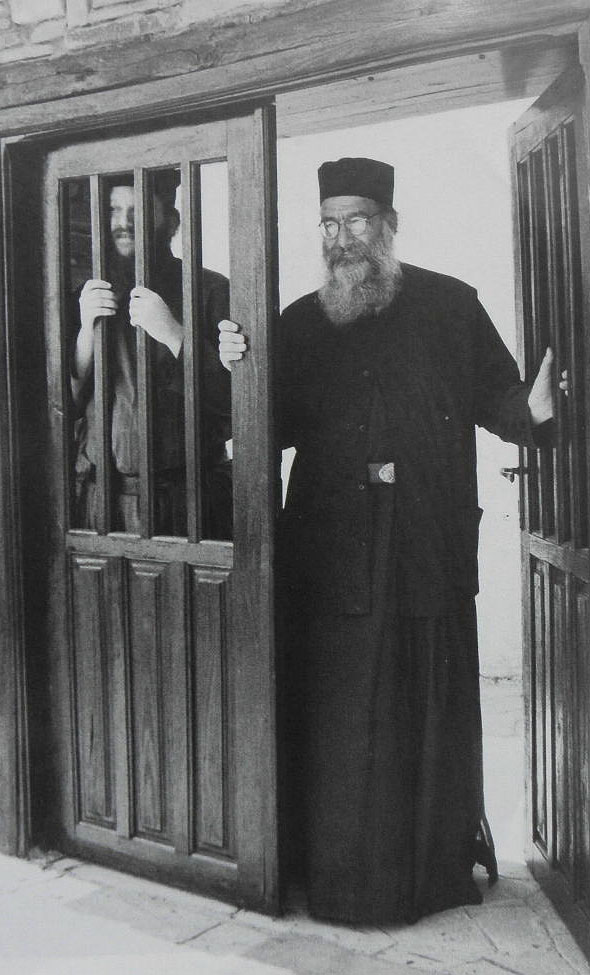
Eremitical life is an expression of spirituality, not religion. When a culture is in a period of profound flux, we spontaneously reach for whatever provides us with a sense of stability. If the religious practices to which we have been accustomed fail to meet our needs, we begin to dig more deeply, bypassing inadequate expressions, usually incarnated in communal formulations, to find our individual roots in the Spirit. Since the end of World War II, there has been a gradual revival of hermit life in Western Christianity. This surprising development is too young yet to be thoroughly analyzed or its fruits fully appraised. At this point, all we have is anecdotal information; experiences related by those who are living this lifestyle in a culture that does not understand it.

Consider the Ravens: On Contemporary Hermit Life

seek counsel

from Fr. Martin Thornton’s Top Ten on Direction:

1. One has absolute freedom of choice when choosing director.

Remember that Directors do not have to be clergy. There is no compulsion whatsoever when choosing a director. Though a local would make Direction easier, one does not need to choose their own priest or someone nearby.

With the internet, so very true. But where does one find such a person?

2. Give priority, when choosing, to competence.

While this might be hard to find out quickly, Thornton’s point is that your choice of Director should be not be influenced by convenience (place/age/etc.) but by the Director’s skill. Directors should be under direction themselves and should have experience before giving Direction to others.

So someone who themselves has lived the life?! Again, where to find?

4. Make the move yourself.

Like so many things in life, one must make the first move to contact and ask for Direction. The Director should never ask to direct (a sure sign of an incompetent Director).

Ok, I got the message!

1 estate in 3 forms

So hear me out: what if the dissolution of the monasteries (under Henry VIII) was not so bad after all? But the real tragedy was the jumping into the same model with rules and canons at the restoration of religious life? What if rather than useful sisterhoods (which only happened because priests needed help) an eastern model was used?

All monks and nuns share the same ascetic call and belong to a single, all-embracing ‘order’ or ‘estate’; yet within that one ‘estate’ there is a wide variety of patterns and a constant flexibility.

So there is one estate – the monastic – which the individual, male or female, enters through tonsure. More freedom! And then the individual has a choice:

The wide variety of patterns is reduced by St John Climacus (d. circa 649) to three main types: “The monastic way of life takes three general forms: to live in ascetic withdrawal and solitude; to be a hesychast with one or two companions; to dwell with patient endurance in a coenobium.” These three forms—the coenobitic, the eremitic, and the middle or semi-eremitic way of the hesychast who dwells with one or two others—are found at the very outset of Christian monasticism in fourth-century Egypt.

Ware, Metropolitan Kallistos; Walls in Solitude and Communion: Papers on the Hermit Life (Fairacres Publications), 48.

So one estate in three forms. With movement between the forms. Some years active, some years solitary, and some years in the middle. Yet there is one more point that is vital and has been complete (methinks) missed in Anglican “religious life”:

… from the start primary importance was attached to the need for personal spiritual direction under an ‘abba’ or ‘elder’—what the Greek sources call a gerôn and what the Russians were later to term a starets. The variety and flexibility of Eastern monasticism must inevitably seem ill-disciplined and untidy to the Western mind, unless it is remembered that underlying this variety there is the direct personal relationship between the spiritual father or mother and his or her child. This relationship, while it ensures inner order within seeming confusion, is not something that can be contained within institutional forms or controlled by rules.

ibid, 51

So one estate in three forms under the guidance of an “elder”. No need to institutionalise. No need for bishops to be involved and worry about vows. The model, methinks, is that of living one’s baptismal life rather than celibate marriage (to Jesus or the Church).

I suspect this was present in the life of anchorites in England before the Reformation:

The ambivalence in this relationship [between monastic rules and ‘rules’ for solitaries] reflects an underlying tension between monastic and anchoritic ideals. The monastic life is based on obedience, the anchoritic life on independence; one requires the renunciation of the will, the other the exercise of free choice.

Innes-Parker, Catherine; Yoshikawa, Naoë Kukita. Anchoritism in the Middle Ages: Texts and Traditions (Religion and Culture in the Middle Ages), 34.

So missed opportunity?
tiktok

What app eats up most of your screen time — and do you even feel bad about it?

Time for honesty: TikTok. (Go and follow me: afoolandhisprayerbook.)

Do I feel bad? Maybe!? There is lots of rubbish on the app. But I have curated my feed over time and now have lots of interesting people and topics. I try to be encouraging with comments. And even post occasionally.

And my time is my time – something that interests me is never bad.

travel through the book

What’s a movie or book that inspired you to travel?

I have never intentionally travelled – I have moved from one place to another but that was utilitarian. I have no desire nor do I have the “nerve” to travel. But I have travelled through books – that is, the book itself has taken me on a journey of discovery.

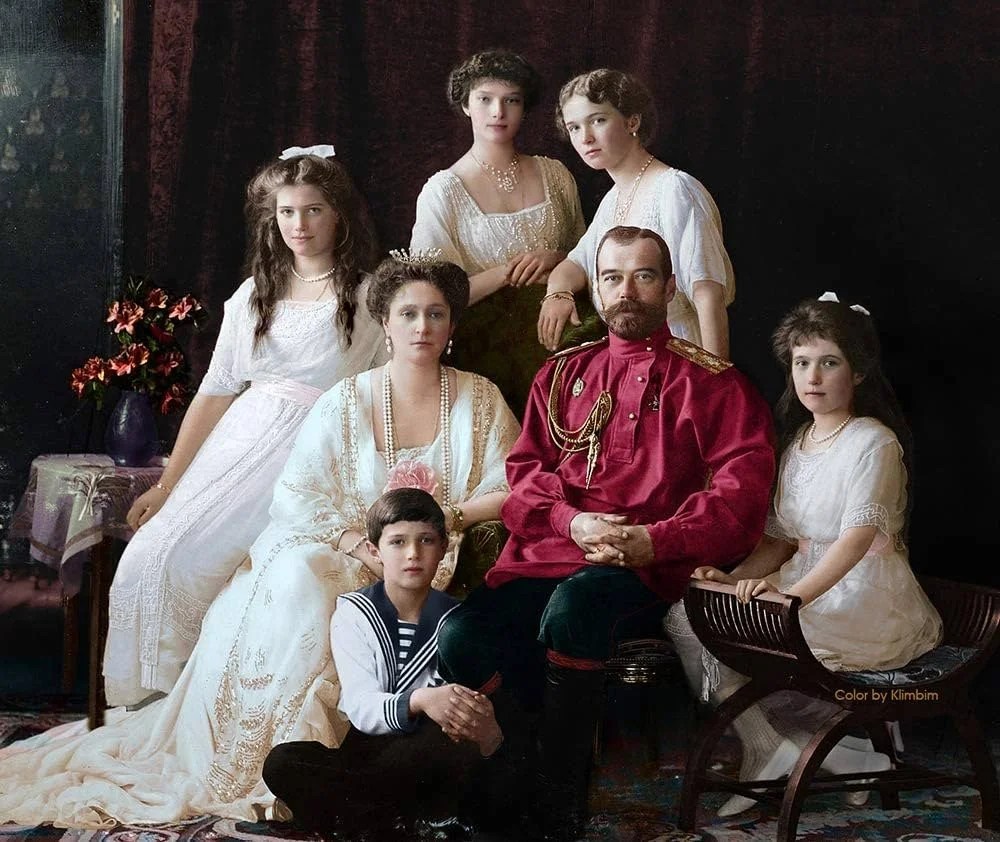
So which book? Just one: The Romanovs: The Story of Russia and its Empire 1613-1918. It made me fall in love with Russia and Russian Orthodox culture. (As an aside, I also read Rasputin: The Untold Story and The Last Tsar: The Abdication of Nicholas II and the Fall of the Romanovs, both of which made me want to read more.) The context and culture is so different to what I have experienced. (Yet, so similar!)

Anyway …