This, then, is the ultimate paradox of thought: to want to discover something that thought itself cannot think.
Kierkegaard
Augustine speaks about thinking about forgetting. We live with this paradox everyday.
This, then, is the ultimate paradox of thought: to want to discover something that thought itself cannot think.
Kierkegaard
Augustine speaks about thinking about forgetting. We live with this paradox everyday.
… the (sacred) heart of Jesus. If there is a devotion that is truly catholic and ecumenical, it is devotion to the heart of Jesus. So I will be sharing some picture of statues of the sacred heart:
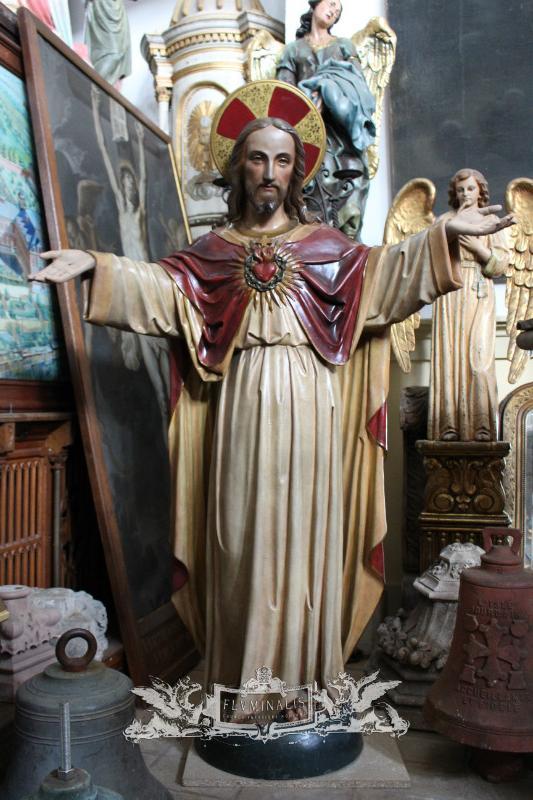
Yesterday’s sermon was about the Inbetween Times. It made me think of the monastic/religious life – a choice/vocation to inhabit the in-between times with purpose. And that made me think of this quote by the “the charismatic evangelical” Archbishop of Canterbury:
Life in Religion is the ultimate wager on the existence of God. The church should always be engaged in doing things that make no sense if God does not exist.
Most Revd Justin Welby, Archbishop of Canterbury
The above is written for the Anglican Religious Life Year Book so when it speaks of “life in religion” it is about monastic life. And the reason most forms of contemplative life are so unknowable to modern society is because it is the “ultimate wager” and “makes no sense” without God.
I have also been thinking that the absolute relationship to the absolute telos should be lived openly in secret. “Enclosed in plain sight”, for a modern anchorite. A complete commitment to Jesus who lives in my heart and I in his. But without the outward trappings of the monastic life – habit and a change of name.
Lord Jesus Christ,
I surrender today to you.
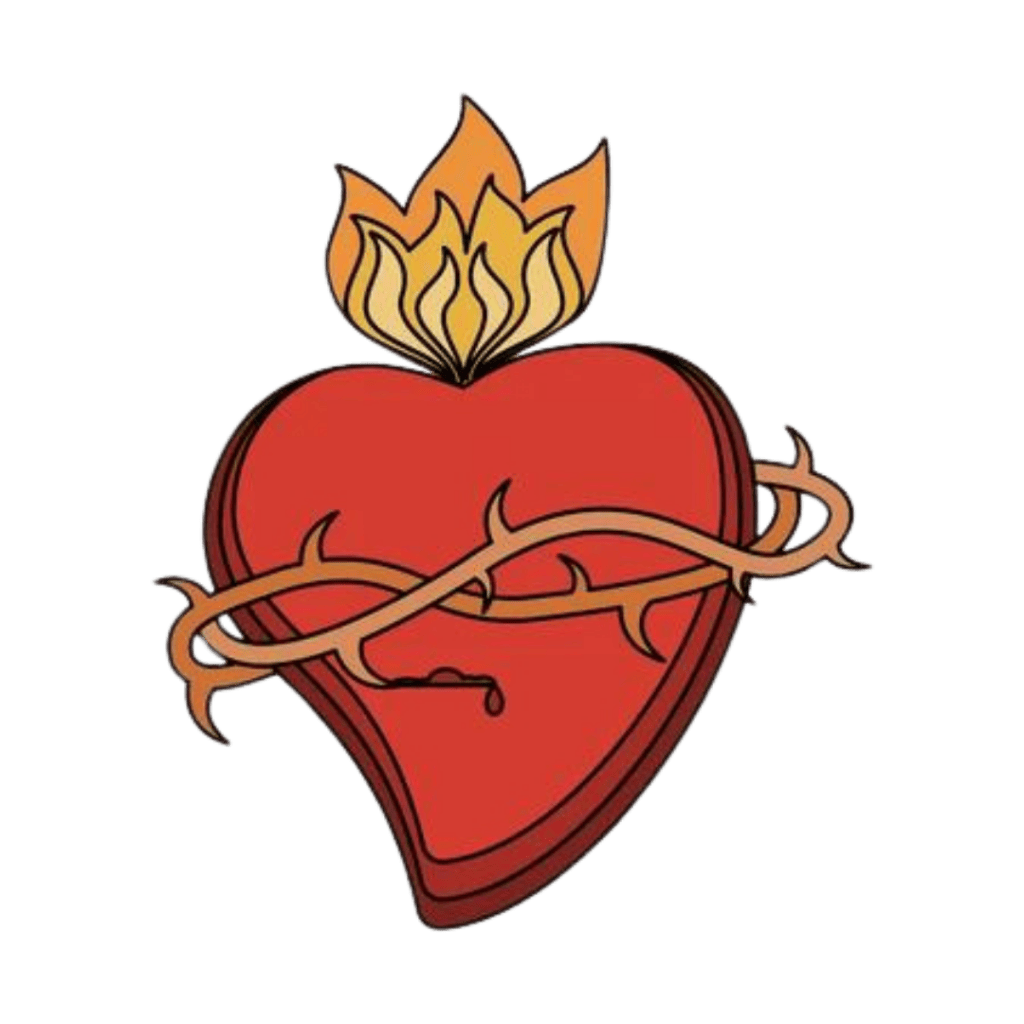
I give myself to you as a living sacrifice,
my soul and body,
my entire being.
I give to you all my thoughts, words and deeds,
all my sufferings and labours,
all my hopes and joys.
Above all, I give to you my heart
so that I may love only you
and be consumed in the fire of your love.
I place my trust in your infinite mercy.
I place within your hands all my cares and anxieties.
And I promise you my love and service.
Do with me what you will, my Jesus.
I desire only you.
Heart of Jesus, I surrender myself to you,
be my everything.
… the self has the task of becoming itself in freedom.
Sickness unto death
So I am having this love affair with Sickness unto Death today. (Or should that be I am having a love affair with Kierkegaard?) So the above really spoke to me.
Sometimes I reflect on the many things that I have heard in sermons throughout the years. For me, that includes some time in seminary.
So, I have been wondering:
Why can I not trust my feelings but I can trust my reasoning?
I cannot recall how many times I have been told that my feelings are untrustworthy but my reasoning I can trust. (And let’s assume that hermeneutics is a form of reasoning.) But how realistic is that? Or, maybe more importantly, how human is that?
Happy to read any answers!
The formula that describes the state of the self when despair is completely rooted out is this: in relating itself to itself and in willing to be itself, the self rests transparently in the power that established it.
Sickness unto Death
I am having a bizarre week emotionally. It started with a bump and bounced around a lot. It is living on the threshold. I admit I have used some of my “emergency medication”. It all feels like Indiana Jones running from the bolder at the start of Raiders. I have an overwhelming sense of doom.
So I have been reading some Kierkegaard – my go-to author in times of trouble. The Sickness unto Death has not been a book I have read a lot. But I was struck, reading it, by the above paragraph. Especially the final phrase, “the self rests transparently in the power that established it”. The balancing act of life is about openly resting in God. I think a case could be made of the religious life being about this “transparency”.
The mandrakes give forth fragrance,
Song of Songs 7:13
and over our doors are all choice fruits,
new as well as old,
which I have laid up for you, O my beloved.
Jesus is proclaimed in new ways. Jesus is proclaimed in traditional ways. And sometimes, he is proclaimed by new old ways.
The only way of coming to know and understand the divine, therefore, is by the god annulling the absolute difference in absolute equality in the absolute paradox of the incarnation.
Sylvia Walsh. Kierkegaard: Thinking Christianly in an Existential Mode
I have quoted the above previously on this blog. I was thinking about it in the broader context of my life. It does use “absolute” a lot but it is necessary. There is no room for a “god of the gaps” in Christianity. I like that it places the incarnation at the centre – or, maybe, it places Jesus at the centre – of all “Christian thinking”. Kierkegaard’s language, of placing Jesus as the absolute telos of our life.
Also: the “absolute difference”! In nature God is transcendent but “in love” is imminent. So the absolute paradox of the incarnation, of Jesus, is God’s act of love. Not to make us “loveable” but because God reaches out in love across the difference that we cannot bridge.
ALSO: the above is very much what Kierkegaard writes about monasticism and the problematic relationship he has with it. There is a way that Kierkegaard lives as a modern solitary.
But, seriously, what would I know?!

